 The technical experts spent a year working closely with the Sierras to document, standardize and adapt their agronomic practices for a wide audience. The result was a methodology called the Synchronized Fertilization and Pruning Technique, known by its Spanish acronym “TAPS.” TAPS focuses primarily on fertilization (adding nutrients to the soil) and pruning (trimming excess leaves and branches from trees) as drivers of productivity. Synchronized pruning and fertilization are recommended in three phases during the year, rather than the traditional annual approach. credit
Monday, January 30, 2017
Revolutionizing Cocoa Farming in Peru.
A technique pioneered by one family is helping thousands of cocoa farmers in Peru increase their yields – and inspiring chocolate enthusiasts around the world. -The small jungle town of Tocache, Peru, was notorious in the ‘80s and ‘90s as a hub of coca production, drug trafficking and violence.
After successful coca eradication efforts in 2002, a government program helped coca farmers in the San Martín region migrate to cocoa production – reorienting from the drug market to the chocolate market. Yet most farmers lacked the knowledge to produce high yields on their new cocoa farms.
Carlos Sierra and his family started growing cocoa along with other farmers in their community, but they quickly stood out. Through tireless trial and error, they developed an agronomy technique that resulted in productivity levels five times the local average. The Sierra farm became well known among cocoa farmers in the San Martín region, yet other farmers struggled to replicate their success.
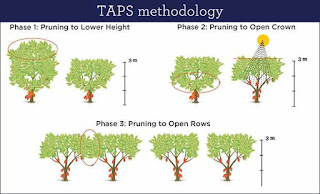 The technical experts spent a year working closely with the Sierras to document, standardize and adapt their agronomic practices for a wide audience. The result was a methodology called the Synchronized Fertilization and Pruning Technique, known by its Spanish acronym “TAPS.” TAPS focuses primarily on fertilization (adding nutrients to the soil) and pruning (trimming excess leaves and branches from trees) as drivers of productivity. Synchronized pruning and fertilization are recommended in three phases during the year, rather than the traditional annual approach. credit
The technical experts spent a year working closely with the Sierras to document, standardize and adapt their agronomic practices for a wide audience. The result was a methodology called the Synchronized Fertilization and Pruning Technique, known by its Spanish acronym “TAPS.” TAPS focuses primarily on fertilization (adding nutrients to the soil) and pruning (trimming excess leaves and branches from trees) as drivers of productivity. Synchronized pruning and fertilization are recommended in three phases during the year, rather than the traditional annual approach. credit

Subscribe to:
Post Comments (Atom)
Agribusiness Millionaires

Learn how to make money in agribusiness.
Popular Posts
-
 VETERINARY MEDICINE: Can Cats Have Down Syndrome? Can cats have Down Syndrome?” to be able to give you a clear and definitive answer. We’l...
 -
 Unrestricted movements to farms,across farms and from other farms to your farm. Contamination of feed and water with droppings. Con...
 -
Twitter https://veterinarymedicineechbeebolanle-ojuri.blogspot.com/2018/09/echbee-foods.html If you’re n...
-
Twitter https://veterinarymedicineechbeebolanle-ojuri.blogspot.com/ If you’re not redirected soon, please us...
-
Researcher improves crop performance with new biotechnology: Farmers can use fewer resources to grow food : Researchers have discovered a wa...
-
Maize farmers get storage bags that help check post-harvest losses. A new technology has been introduced in the region to help reduce maiz...
Claim your bonus here..

Free dog care guide.
CASSAVA BUSINESS

CASSAVA FLAKES.
No comments:
Post a Comment