
Thursday, December 24, 2015

Tuesday, December 22, 2015
Global value of processed poultry tipped to rise
Global value of processed poultry tipped to rise The demand for poultry is on the increase thus more revenue is to be generated from the industry.The areas of processing, packaging,transportation and innovative products all make the industry a viable one.
 The demand for poultry is on the increase thus more revenue is to be generated from the industry.The areas of processing, packaging,transportation and innovative products all make the industry a viable one.
HYDROPONICS AND FOOD SECURITY.


 Benefits of hydroponics.
1) There is no need for soil means more food can be grown on less land,this is ideal for a growing, urbanizing global population.
2) Yields can be up to 10 times more than from open field agriculture.
3) The water used can be recycled.
4) Farms can be anywhere, from skyscrapers to shipping containers.
5)Pollution from pesticides and herbicides can be prevented.
6)Local production reduces food miles and transportation costs.
,
A tech firm Fujitsu , at its Aizu Wakamatsu factory in central Japan is applying cloud-based data analytic s to the production of low-potassium lettuce and spinach.The operation takes place in a dust-free "clean-room" formerly used for semiconductor production.
Fujitsu's cloud platform - Akisai - stores and analyses data from lots of sensors in the greenhouses, and enables heating units, ventilation fans and other equipment to be operated remotely."In terms of quality, we have applied the same industrial perspective from semiconductor manufacturing to vegetable cultivation," a Fujitsu spokesman tells the BBC.
"Having a control structure that keeps product specifications - the weight and nutrient constituent-parts of lettuce - within a defined range, makes for effective high added-value vegetable production."
The company sells the lettuce it produces to hospitals, supermarkets, and hotels - as well as online - and says its cloud service is collecting valuable data that is leading to improved quality and higher yields. Fujitsu's insights and efficiency improvements could also encourage more producers to enter the market and "lead to an increase in younger generations getting into agriculture", the spokesman adds.
Story credit;BBC news.
Benefits of hydroponics.
1) There is no need for soil means more food can be grown on less land,this is ideal for a growing, urbanizing global population.
2) Yields can be up to 10 times more than from open field agriculture.
3) The water used can be recycled.
4) Farms can be anywhere, from skyscrapers to shipping containers.
5)Pollution from pesticides and herbicides can be prevented.
6)Local production reduces food miles and transportation costs.
,
A tech firm Fujitsu , at its Aizu Wakamatsu factory in central Japan is applying cloud-based data analytic s to the production of low-potassium lettuce and spinach.The operation takes place in a dust-free "clean-room" formerly used for semiconductor production.
Fujitsu's cloud platform - Akisai - stores and analyses data from lots of sensors in the greenhouses, and enables heating units, ventilation fans and other equipment to be operated remotely."In terms of quality, we have applied the same industrial perspective from semiconductor manufacturing to vegetable cultivation," a Fujitsu spokesman tells the BBC.
"Having a control structure that keeps product specifications - the weight and nutrient constituent-parts of lettuce - within a defined range, makes for effective high added-value vegetable production."
The company sells the lettuce it produces to hospitals, supermarkets, and hotels - as well as online - and says its cloud service is collecting valuable data that is leading to improved quality and higher yields. Fujitsu's insights and efficiency improvements could also encourage more producers to enter the market and "lead to an increase in younger generations getting into agriculture", the spokesman adds.
Story credit;BBC news.
MERS VACCINE !!!
 An effective vaccine to protect against the Mers virus is a step closer,european scientists genetically modified a version of the smallpox vaccine to display Mers virus protein on its surface.
The vaccine was able to protect camels - the animal reservoir for the virus - from developing Mers virus symptoms. Experts hope the vaccine might stop the virus spreading in camels and may also protect humans at risk from infection.
Infections have been reported in 26 countries around the world with the outbreak epi-centre located in the Arabian Peninsula.There are no treatments for Mers but scientists are trying to develop an effective vaccine. One such scientist is Prof Bart Haagmans, who is based at the Erasmus Medical Centre in the Netherlands. He has been busy developing and testing vaccines in camels.
A team of scientists drawn from the Netherlands, Spain and Germany, genetically engineered a pox virus called Modified Vaccinia Ankara -MVA - to display Mers virus spike protein on its surface. MVA, related to the virus used to eradicate smallpox, was used to eradicate smallpox and is currently being used to develop vaccines to a variety of viruses like influenza, Ebola and hepatitis C. Importantly it can produce antibodies and killer cells.The Mers spike protein is thought to be a major target for the immune response. The team hoped that by cloaking MVA with this spike they would train the immune system to recognize and kill Mers.
The team took the engineered MVA, sprayed it up the noses of camels and injected it into their muscle, and then four weeks later they repeated the vaccination again.
When the team exposed the vaccinated animals to the Mers virus the camels developed very mild symptoms. Crucially they didn't develop a runny nose and the amount of virus they produced was very low.
Camels that hadn't received the vaccine produced very large amounts of virus and suffered a very runny nose. This indicates that even though the vaccine didn't prevent infection it did reduce the amount of virus that the vaccinated camels produced.
story credit BBC news.
An effective vaccine to protect against the Mers virus is a step closer,european scientists genetically modified a version of the smallpox vaccine to display Mers virus protein on its surface.
The vaccine was able to protect camels - the animal reservoir for the virus - from developing Mers virus symptoms. Experts hope the vaccine might stop the virus spreading in camels and may also protect humans at risk from infection.
Infections have been reported in 26 countries around the world with the outbreak epi-centre located in the Arabian Peninsula.There are no treatments for Mers but scientists are trying to develop an effective vaccine. One such scientist is Prof Bart Haagmans, who is based at the Erasmus Medical Centre in the Netherlands. He has been busy developing and testing vaccines in camels.
A team of scientists drawn from the Netherlands, Spain and Germany, genetically engineered a pox virus called Modified Vaccinia Ankara -MVA - to display Mers virus spike protein on its surface. MVA, related to the virus used to eradicate smallpox, was used to eradicate smallpox and is currently being used to develop vaccines to a variety of viruses like influenza, Ebola and hepatitis C. Importantly it can produce antibodies and killer cells.The Mers spike protein is thought to be a major target for the immune response. The team hoped that by cloaking MVA with this spike they would train the immune system to recognize and kill Mers.
The team took the engineered MVA, sprayed it up the noses of camels and injected it into their muscle, and then four weeks later they repeated the vaccination again.
When the team exposed the vaccinated animals to the Mers virus the camels developed very mild symptoms. Crucially they didn't develop a runny nose and the amount of virus they produced was very low.
Camels that hadn't received the vaccine produced very large amounts of virus and suffered a very runny nose. This indicates that even though the vaccine didn't prevent infection it did reduce the amount of virus that the vaccinated camels produced.
story credit BBC news.
CAMELS AND MERS VIRUS.
Camels, which are bred and raised for their milk and meat and for racing, are thought to be the initial source of human outbreaks. The virus is particularly prevalent in juvenile camels, where infection results in symptoms that are similar to a common cold. The virus is thought to pass to humans when they have contact with an infected camel's body fluids. Circulation of Mers in camels poses a serious risk to human health and many scientists are worried that the virus might mutate to become better adapted to human spread. That's why scientists are trying to develop vaccines - to stop the virus infecting humans and also to reduce the amount of virus circulating in camels.
Vaccination is aimed at protection;Vaccines train our immune response to recognize a virus and to wipe it out before it can infect us or before it can do any harm.The vaccine acts in 2 forms;there are two arms to this protection - antibodies and killer cells. Antibodies are proteins found in human blood and in body fluids like mucus and saliva and these attach to the virus and stop it infecting.
The Killer cells, , track down virus infected cells and kill the cell before new virus is released. Some vaccines raise antibodies, some produce killer cells and some raise both.
The MERS infection of humans was first described in Saudi Arabia in 2012 and Since then there have been more than 1,600 reported cases. One third of reported infections have resulted in death.
Individuals with other illnesses - such as diabetes, long term lung disease or kidney failure - are particularly prone to developing life-threatening symptoms. Virus spread is limited to people who have close contact with those who are infected, such as family members and healthcare workers.
There are no treatments for Mers but scientists are trying to develop an effective vaccine.
CALVES UNDERGO GENETIC EDITING TO PREVENT GROWTH OF HORNS.
The two calves that grace a muddy pen on the UC Davis campus will never grow horns typical of their breed. Instead, they’ll always sport soft hair on the parts of their heads where hard mounds normally emerge. The calves were designed in a petri dish at a Minnesota-based genetics lab, with the goal of making them easier to pack into pens and trucks without the nuisance of their horns taking up valuable space. Their offspring may also lack horns, and generations of hornless cows could follow, potentially saving the dairy and cattle industry millions of dollars, said Alison Van Eenennaam, a geneticist at UC Davis’ College of Agriculture and Environmental Sciences who worked with the Minnesota lab Recombinetics.
This first-of-a-kind result of a process called genetic editing is a test run that’s expected to deeply impact the cattle and dairy industry and the entire food supply, Van Eenennaam said. It’s also part of a flurry of research looking at how to make cattle easier to maintain, transport and turned into food. The research has raised concerns among some farmers and animal-rights activists who warn of the health and ethical risks of consuming genetically modified food, but so far, that hasn’t stopped the research drive. At UC Davis, animal geneticist Pablo Juan Ross has been trying to perfect a technique developed a decade ago but now gaining more acceptance to design cattle that produce only male offspring.“Males grow faster than females, and in beef production they are more desirable,” Ross said.
Another project uses stem cells to produce a clone animal, Ross said. Genetic editing could also help design cows that are less prone to pneumonia, which would reduce their need for antibiotics.Van Eenennaam is keen on using word processing as an analogy to describe the differences between genetic editing and engineering. She likens genetic editing to changing the spelling of a word within a document and genetic engineering to pasting in a word from a completely different document.“You’re not bringing in something foreign ... like introducing a protein from a tomato into a fish, which is what is associated in genetic engineering,” she said.
The two dairy calves had a precise section of DNA responsible for horn growth was knocked out and replaced with a precise section from a cow that does not produce that trait. Many cattle varieties do not grow horns, including Angus cattle. With dairy cattle – both male and female – horns are a given, and the animals are dehorned soon after they’re born.Once the cows are sexually mature, Van Eenennaam will collect semen from the bulls to inseminate horned cows – the route by which most cows are impregnated in the cattle and dairy industry. The plan is to track the calves’ growth and development and see whether the two faithfully transmit the hornless trait to their offspring.“The odds are 100 percent if Mendelian genetics holds true,” she said.She added that it’s not clear whether other, unexpected effects of editing will appear. If successful, it will allow the industry to bypass decades of breeding for polled, or hornless, cows. At the University of Missouri, researchers focus on genetically modifying pigs to remove genetic traits for maladies such as retinitis pigmentosa, hemophilia and cystic fibrosis, said Randall Prather, an animal geneticist at the school.
Story credit; http://www.sacbee.com/news/local/health-and-medicine/article50822850.html
Monday, December 21, 2015
BLIND DOG NAMED CHRISTMAS RESCUED AFTER BEING TRAPPED IN WELL .
According to ABC eye witness reports; a blind, elderly dog named Christmas has been rescued after months of living alone in a well, -- and his rescue was captured in a touching video, ABC News reports.
(http://abc11.com/pets/blind-dog-named-christmas-rescued-after-being-trapped-in-well-for-months/1131401/)
"Surprisingly, the dog is in fairly good, psychical condition," said Laura Simpson, founder of the Harmony Fund in Holden, Massachusetts. "The blindness of course is from a pre-existing condition, but he's now in foster care and we're hoping he can find a home there he's loved and respected in the way he should be."
Simpson told ABC News that it was last week when international animal rescuer Fahrudin Caki Bravo and his friend Ratko Koblar received word of a dog trapped in a well in nearby Bosnia."The dog had been there for months and they don't know if he was thrown in, or if he fell in," Simpson said. "We're certainly hoping that he fell, but with the dog being completely blind, he was only kept alive because the local children were kind enough to feed him.""He (Bravo) and his friend thought it was perfectly feasible getting the dog out and they did a great job," she added. "They made it look easy."
Following his rescue,  , Christmas received veterinary care and was placed in foster care.
 , Christmas received veterinary care and was placed in foster care.
DOG BREEDERS AND SALE OF SICK PUPPIES.
Julie Crumpler Peele faces five additional felony charges of obtaining property under false pretenses. These are in addition to the two charges she already faced last month after two different viewers who say Peele sold them sick puppies.When confronted Peele in October, she denied the puppies she sells are sick."It makes me very angry," Paige McKeithan said.McKeithan told me she met Peele in July, 2014 and bought a dog named Gunner from her."My mom was holding him and we felt that the stomach was really tight, and so my mom asked if the dog was sick, and she said no he just didn't like car rides. So I thought he was just sick from that," McKeithan added.But she said within 24 hours of buying him from Peele, Gunner had to be rushed to the vet. McKeithan said the vet suspected the parvo virus and also that Gunner had parasites and bacteria in his bloodstream. She spent over $2,000 in vet care for Gunner, and said the vet did everything she could to get Gunner healthy, but nothing was working. According to ( http://abc11.com/pets/woman-allegedly-selling-sick-puppies-facing-new-charges/1077899/)She had to put Gunner down, and now she has a message for Peele: "Just for her to stop doing this and for something to be done."
RABIES AND DOG IMPORTATION.
Dog breeders and pet lovers and owners have been warned continuously of dangers associated with dog importation.The breeders are supposed to ensure the dogs get the necessary vaccinations before they are sold and shipped off, but some mischievous breeders/puppy mill merchants dont vaccinate these pets thus exposing the pet lovers to a risk.The pets that are shipped branding certificates are often times discovered to be fake, thus strict documentation laws must be ensured and vaccination records verified to ensure safety.
There has been cases of shipping off animals to other countries which were incubating various pathogens, a recent case is the rabid dog shipped to the US from Egypt (as reported by STAT http://www.statnews.com/2015/12/17/rabies-dog-cdc/)
The rabid dog was transported into the country in May by an animal rescue organization. It was later discovered the dog’s rabies vaccination certificate was a fake, CDC officials said .It’s the fourth time — that officials know of — in the last 11 years that a rabid dog has been imported to the United States.
Ten people who had substantial contact with the animal were advised to get post-exposure rabies treatment and eight more involved in its importation opted to get vaccinated as a precaution, CDC and state health department officials wrote in a report on the incident published in this week’s Morbidity and Mortality Weekly Report, a journal operated by the CDC.‘There’s no shortage of adoptable dogs in the US’
Dr. Nicky Cohen said the CDC issued guidelines last year to spell out what is needed, from a rabies control standpoint, to import companion animals to the United States. Chief among them: an authentic rabies vaccination certificate. It also pointed out some red flags to look for on rabies vaccination certificates to spot fakes — things like multiple dogs in a shipment having identical certificates or evidence that a dog’s name has been whited out.
“It’s pretty basic,” Cohen admitted. “There have been four incidences where rabid dogs have been imported. But we do know that more dogs than just these four have been imported with falsified records. This was issued in response to the recognition of imported dogs with falsified vaccination records.”The dog from Egypt was part of a shipment of eight dogs and 27 cats. It was the only animal in the shipment that was infected.

Sunday, December 20, 2015
BUSINESS OPPORTUNITIES IN THE POULTRY VALUE CHAIN.
Poultry production has always been a source of income and the recent ban on importation of frozen poultry products,has opened up more avenues to make more money as demand for home grown birds have increased.
The poultry value chain is a lucrative venture with specific points for investments such as ; producers, transporters,processors, retailers, and innovative products.There is a gap to be filled and numerous products can be introduced to the market;


FINANCIAL ANALYSIS ; RAISING BROILERS FOR PROFIT.
REARING COST FOR 5OO BROILERS;
EXPENDITURE AMOUNT.
1) Land...............................................1,500,000
2)Housing...........................................900,000.
3) D.O.C @ 200#.....................................100,000.
4) Brooding cost @ 25#/chick........................12,500.
5)vaccination/medication @ 40#....................20,000.
6)Farm supplies,tools,wheel barrow................15,000.
7)Drinker/feeder.....................................25,000.
8) Feed @ 100g/chick/day @ 0-3 weeks cost of feed(2800).....11,760.
9)Feed @ 180g/chick/day for 4-7 weeks and cost of feed..3000....226,800.
10) Labor...................................20,000.
TOTAL.............................2,831,060.
Analysis.
sale of birds @ 2000/bird.
2000x 490(2% mortality}......980,000.
Profit=sale proceeds-recurrent expenditure
= 980,000- 391,060
588,940 Naira.
An investor will have a profit of 588,940; and subsequent production cost will reduce because the capital expenditure is paid for at onset of production An investor can have this turn over every 42 days,thats a good turn-over.


POULTRY VALUE CHAIN: LESSONS FROM INDIA.
 Broiler production in India is projected to increase by approximately 8% to 4.2 million tonnes in 2016 on rising demand from the growing middle class.Local estimates believe that demand for processed chicken meat is growing between 15-20% per year, according to a recent USDA GAINS report.The organised sector produces an estimated 80% of total chicken meat production, and is mainly concentrated in Tamil Nadu, Andhra Pradesh, Maharashtra, Karnataka, and West Bengal. The live poultry market constitutes 90 to 95% of total sales since most consumers prefer freshly culled chicken meat.
Within the last ten years, many broiler enterprises have vertically integrated their operations, especially in southern and western India. Approximately 60-70% of all operations use the integrator model, while the remaining are smaller backyard operations. Integrator' s own all the hatcheries, feed mills, and slaughter facilities, and contract with multiple smaller farmers who raise the chicks to slaughter weight primarily in open air sheds. One integrator may have as many as 20,000 contracted farms, however, in a few cases integrator's may sell chicks or feed without requiring a contract.
Some integrator's also provide credit, extension services, and veterinary medicine. At the end of the production cycle, the live birds either are purchased by the integrator's for slaughter and further processing, or by a middle man/wholesaler, eventually arriving at a live bird wet market for local sale.
For 2016, egg production is forecast at 80 billion eggs, up 5% from last year. In order to mitigate rising transportation costs and better maintain quality control, poultry companies are reportedly establishing more layer farms near highly urbanised areas.
The processed chicken meat sector is growing at a rate between 15-20% per year due to the growing middle class, which reportedly has positively affected sales not only in retail, but quick service restaurants and the hotel, restaurant, and institutional sector. A few major poultry companies have started expanding their slaughtering and processing facilities, and are beginning to offer a wider range of processed chicken meat products for the retail sector like frozen chicken burgers, salamis, nuggets, sausages, and tikkas. India's per capital consumption of poultry meat is estimated at around 3.1 kg per year, which is low compared to the world average of around 17 kg per year. India's per capital consumption of eggs is estimated at about 62 eggs per year.
More and more people are shifting to poultry and poultry by-products,as a means of livelihood, employment opportunities and providing more protein for the nation.The sector provide various points of investment opportunities,which are very profitable.
portions of story from world poultry.
Broiler production in India is projected to increase by approximately 8% to 4.2 million tonnes in 2016 on rising demand from the growing middle class.Local estimates believe that demand for processed chicken meat is growing between 15-20% per year, according to a recent USDA GAINS report.The organised sector produces an estimated 80% of total chicken meat production, and is mainly concentrated in Tamil Nadu, Andhra Pradesh, Maharashtra, Karnataka, and West Bengal. The live poultry market constitutes 90 to 95% of total sales since most consumers prefer freshly culled chicken meat.
Within the last ten years, many broiler enterprises have vertically integrated their operations, especially in southern and western India. Approximately 60-70% of all operations use the integrator model, while the remaining are smaller backyard operations. Integrator' s own all the hatcheries, feed mills, and slaughter facilities, and contract with multiple smaller farmers who raise the chicks to slaughter weight primarily in open air sheds. One integrator may have as many as 20,000 contracted farms, however, in a few cases integrator's may sell chicks or feed without requiring a contract.
Some integrator's also provide credit, extension services, and veterinary medicine. At the end of the production cycle, the live birds either are purchased by the integrator's for slaughter and further processing, or by a middle man/wholesaler, eventually arriving at a live bird wet market for local sale.
For 2016, egg production is forecast at 80 billion eggs, up 5% from last year. In order to mitigate rising transportation costs and better maintain quality control, poultry companies are reportedly establishing more layer farms near highly urbanised areas.
The processed chicken meat sector is growing at a rate between 15-20% per year due to the growing middle class, which reportedly has positively affected sales not only in retail, but quick service restaurants and the hotel, restaurant, and institutional sector. A few major poultry companies have started expanding their slaughtering and processing facilities, and are beginning to offer a wider range of processed chicken meat products for the retail sector like frozen chicken burgers, salamis, nuggets, sausages, and tikkas. India's per capital consumption of poultry meat is estimated at around 3.1 kg per year, which is low compared to the world average of around 17 kg per year. India's per capital consumption of eggs is estimated at about 62 eggs per year.
More and more people are shifting to poultry and poultry by-products,as a means of livelihood, employment opportunities and providing more protein for the nation.The sector provide various points of investment opportunities,which are very profitable.
portions of story from world poultry.
Friday, December 18, 2015
NEW INSIGHTS ABOUT INSECT INCLUSION IN ANIMAL DIET.
The EC-funded PROteINSECT project has today released an up-to-date review and analysis of the current status of insects as a viable, sustainable, additional source of protein for use in animal feed in Europe.
In 2015, fish, poultry, and pig feeding trials are being conducted in 2015 in Europe (Belgium and UK) based on PROteINSECT UK derived insect protein whereas, fish and chicken feeding trials will be conducted in China, Mali and Ghana with insect protein being sourced from PROteINSECT partners within each country.
According to PROteINSECT, consumers are willing to consume food from animals that received insects in the feed, as long it is mentioned on the food label, according to the majority. The contribution that insects can make to addressing the protein deficit and to help address the global challenge of future food security.
Insects are rich in protein and are a natural component of the diets of carnivorous fish and freerange poultry. Fly larvae can be reared on a wide range of wastes and by-products and offer a
potential way of recovering value from materials that may be disposed of by agriculture and food
industries.
House fly and black soldier fly production systems have showed favourable results in terms of their space requirements but considerable improvement within the systems that PROteINSECT
has evaluated is required to improve the heating related energy usage and water consumption.
The supply of organic waste is increasing along with demand for animal products; production of
insect protein presents an opportunity to produce low value waste and produce high value products for inclusion in animal feed.
read more ; world poultry.
Insects as protein source for animal feed.
 Insect Farming Is taking Shape as demand for animal feed rises;As the world grows hungrier for animal protein, insects could be the new way to feed livestock.
However, food producers are likely to feel the pinch as the world’s population climbs to nine billion by 2050, while rising incomes in large countries like China and India lead to greater demand for meat-rich diets. So entrepreneurs, researchers, and even the United Nations are looking for an animal feed less expensive than the soybeans and fish meal typically used today. Insects like mealworms and fly larvae, a natural food for wild birds and fish, could be a near-perfect replacement. With several startups planning industrial-scale operations, it may not be long before some poultry or fish entrées are raised on a regular diet of bugs.
15 % of all wild-caught fish goes to feeding farmed fish, pigs, or poultry. Soybean production, about 95 percent of which goes into animal feed, has seen a significant spike since the 1990s and will reach record highs this year. But unless yields can be significantly increased, continuing this surge would mean gobbling up additional land and water. Not only do insects use far less of these resources than soy, but they also feed on food waste. Furthermore, they’re comparable to soy in protein content.
Breeding trials conducted by the E.U. initiative PROteINSECT have found that one hectare of land could produce at least 150 tons of insect protein per year. By comparison, soy planted over the same area yields just under a ton of protein per year.
Feeding trials also suggest that a bug-based diet will produce bigger, stronger livestock. In its 2013 report on edible insects, the Food and Agriculture Organization of the U.N. pointed to several studies on fish and Japanese quail in which ground crickets replaced up to 50 percent of the fish meal in their feed. The fish outperformed counterparts fed traditional diets on every growth parameter, and the cricket-fed quail laid more eggs than the control group.
story credit; http://www.technologyreview.com/news/529756/insect-farming-is-taking-shape-as-demand-for-animal-feed-rises/
Insect Farming Is taking Shape as demand for animal feed rises;As the world grows hungrier for animal protein, insects could be the new way to feed livestock.
However, food producers are likely to feel the pinch as the world’s population climbs to nine billion by 2050, while rising incomes in large countries like China and India lead to greater demand for meat-rich diets. So entrepreneurs, researchers, and even the United Nations are looking for an animal feed less expensive than the soybeans and fish meal typically used today. Insects like mealworms and fly larvae, a natural food for wild birds and fish, could be a near-perfect replacement. With several startups planning industrial-scale operations, it may not be long before some poultry or fish entrées are raised on a regular diet of bugs.
15 % of all wild-caught fish goes to feeding farmed fish, pigs, or poultry. Soybean production, about 95 percent of which goes into animal feed, has seen a significant spike since the 1990s and will reach record highs this year. But unless yields can be significantly increased, continuing this surge would mean gobbling up additional land and water. Not only do insects use far less of these resources than soy, but they also feed on food waste. Furthermore, they’re comparable to soy in protein content.
Breeding trials conducted by the E.U. initiative PROteINSECT have found that one hectare of land could produce at least 150 tons of insect protein per year. By comparison, soy planted over the same area yields just under a ton of protein per year.
Feeding trials also suggest that a bug-based diet will produce bigger, stronger livestock. In its 2013 report on edible insects, the Food and Agriculture Organization of the U.N. pointed to several studies on fish and Japanese quail in which ground crickets replaced up to 50 percent of the fish meal in their feed. The fish outperformed counterparts fed traditional diets on every growth parameter, and the cricket-fed quail laid more eggs than the control group.
story credit; http://www.technologyreview.com/news/529756/insect-farming-is-taking-shape-as-demand-for-animal-feed-rises/
PORCINE EPIDEMIC DIARRHOEA VIRUS .(PEDV)
 PED is to become a notifiable disease in England from Friday December 18,2015 and pig-keepers and vets will be legally required to inform the Animal and Plant Health Agency of any suspicion of the disease.
PED remains a significant threat to British pig-keepers. Outbreaks of high-impact strains caused up to 100% mortality in young pigs in the United States, knocking out around 10% of pig production in 2013-2014. The disease has since spread to Ukraine. Even with milder European Union strains, piglet mortality as high as 70% has been reported.The aim will be to prevent spread of PED and to eliminate the disease from the pig unit. There will be no requirement to slaughter affected animals.
story credit; pig process.
PED is to become a notifiable disease in England from Friday December 18,2015 and pig-keepers and vets will be legally required to inform the Animal and Plant Health Agency of any suspicion of the disease.
PED remains a significant threat to British pig-keepers. Outbreaks of high-impact strains caused up to 100% mortality in young pigs in the United States, knocking out around 10% of pig production in 2013-2014. The disease has since spread to Ukraine. Even with milder European Union strains, piglet mortality as high as 70% has been reported.The aim will be to prevent spread of PED and to eliminate the disease from the pig unit. There will be no requirement to slaughter affected animals.
story credit; pig process.
MANAGING COCCIDIOSIS..
The critical control points for coccidiosis vaccination; effective way of preventing coccidiosis is vaccination at the hatchery. This only works out well if critical points are taken into account, both at the hatchery as well as in a later stage at the farm.
Vaccination against coccidiosis in poultry is used mainly in broiler, turkey and layer breeder flocks; commercial layer flocks reared on the floor; antibiotic free broiler operations and some commercial turkey grower operations. Vaccinating with a coccidiosis vaccine in conventional broiler operations is increasing rapidly, mainly in a rotational programme with anticoccidials, aiming at restoring the sensitivity of the anticoccidials. Whatever the reason for vaccinating with a coccidiosis vaccine, attention to some critical factors will determine the level of success of establishing immunity against coccidiosis.
The Eimeria parasites given during the vaccination, infects the intestinal cells and continues its life cycle inside the gut. Un sporulated oocysts are excreted after 5-7 days, time depending on the species; the oocysts then sporulate outside the bird, given suitable environmental conditions exists, and after re-ingestion of these sporulated oocysts, infection and another cycle starts. Immunity development is dependent on successful excretion of oocysts and then re-ingestion of these sporulated, shed oocysts. Depending on the species, 2-3 infection – excretion – re-ingestion – re-infection – excretion cycles are needed to acquire a protective immunity.
The vaccination process and the subsequent development of immunity, irrespective of the application method, can thus be divided in two distinct areas:Vaccine application – ensuring uptake of the vaccine . Post vaccination management include ; ensuring suitable environmental conditions for sporulation exists and recycling of the sporulated oocysts takes place.
The necessary procedures to actually check the vaccine uptake by the birds must be implemented. Adding a suitable dye to the vaccine makes this possible by randomly checking boxes/crates of chicks/poults and see if they actually did ingest the vaccine by counting the number of chicks/poults in the box/crate with a dye colored tongue .
. Recycling of oocysts and monitoring
Oocyst shedding can be measured by sending faecal samples to a lab that is capable of doing an Oocyst Per Gram (OPG) count. Faecal material (NOT bedding) is collected at specific intervals post vaccination: Chickens at days 7/14/21/28 post vaccination
Turkeys at days 6/13/20/27 post vaccination. The first count should be positive. This is a very good indicator of the effectiveness of the vaccine application done in the hatchery as well as an indicator that the vaccine that was used was still infective. The second count should show a significant increase. This is used as an indicator that the shed oocysts sporulated and re-ingestion of these shed oocysts have taken place.
Read more ;world poultry.
BACTERIAL ENTERITIS.(BE)
 Elanco Animal Health recently released findings from its fourth Bacterial Enteritis Global Impact Assessment (BEGIA), providing interesting insights into ongoing trends of a disease that continues to have important impact on our industry. Diarrhoea and wet litter continue to be the signs most often associated with emerging cases of Bacterial enteritis.
The 15 years of survey data shows that prevalence and economic loss continue, while early intervention becomes a more favored strategy as the years progress.This year's results confirm those from past surveys: BE continues to be very prevalent and affect productivity and profitability. However, the 2015 survey also found some interesting new trends in treatment initiation, perhaps as a way to mitigate these effects.
Diarrhea and wet litter continue to be the signs most often associated with emerging cases of BE (as found in 2005 and 2010), and necropsy and clinical observation are still the preferred methods for diagnosing BE. High percentages of respondents associate coccidiosis with increased prevalence and severity of BE . Most respondents agree that preventing coccidiosis reduces issues at processing .The vast majority of respondents agree that BE prevalence and severity increase when coccidiosis is present.
The respondents were asked to look at photos of intestinal lesions and assess at what stage of illness they believe economic damage was likely to occur. About half of respondents said they believe economic losses begin at the earliest stage, an increase of nearly 5% compared to 2010 .Survey participants also seem to be trending toward earlier flock treatment, with most indicating they would initiate treatment when 5-20% of the flock is infected (Figure 8). In 2010, respondents favoured treatment when 20-30% of the flock was infected.
Treatment options remain the same;More than 75% of the survey participants indicated that their end-customers (retailers, slaughterhouses, exporters, etc.) preferred a preventive approach to managing disease. When it comes to preventing BE, respondents find water treatment and growth-promoting feed additives the most effective options, this trend that hasn't changed since 2010 .
story credit; World poultry.
Elanco Animal Health recently released findings from its fourth Bacterial Enteritis Global Impact Assessment (BEGIA), providing interesting insights into ongoing trends of a disease that continues to have important impact on our industry. Diarrhoea and wet litter continue to be the signs most often associated with emerging cases of Bacterial enteritis.
The 15 years of survey data shows that prevalence and economic loss continue, while early intervention becomes a more favored strategy as the years progress.This year's results confirm those from past surveys: BE continues to be very prevalent and affect productivity and profitability. However, the 2015 survey also found some interesting new trends in treatment initiation, perhaps as a way to mitigate these effects.
Diarrhea and wet litter continue to be the signs most often associated with emerging cases of BE (as found in 2005 and 2010), and necropsy and clinical observation are still the preferred methods for diagnosing BE. High percentages of respondents associate coccidiosis with increased prevalence and severity of BE . Most respondents agree that preventing coccidiosis reduces issues at processing .The vast majority of respondents agree that BE prevalence and severity increase when coccidiosis is present.
The respondents were asked to look at photos of intestinal lesions and assess at what stage of illness they believe economic damage was likely to occur. About half of respondents said they believe economic losses begin at the earliest stage, an increase of nearly 5% compared to 2010 .Survey participants also seem to be trending toward earlier flock treatment, with most indicating they would initiate treatment when 5-20% of the flock is infected (Figure 8). In 2010, respondents favoured treatment when 20-30% of the flock was infected.
Treatment options remain the same;More than 75% of the survey participants indicated that their end-customers (retailers, slaughterhouses, exporters, etc.) preferred a preventive approach to managing disease. When it comes to preventing BE, respondents find water treatment and growth-promoting feed additives the most effective options, this trend that hasn't changed since 2010 .
story credit; World poultry.
DDGS AND POULTRY FEED.
Distillers Dried Grain with Solubles (DDGS) is the result of extracting ethanol from grains through dry milling.The corn kernel, which is a source of food for humans and animals, its also a source of ethanol, a fuel source. Dried distillers grains with solubles (DDGS) offer nutrients and energy, DDGS can be sourced from corn, rice, wheat, sorghum and are highly useful for livestock and poultry. Ethanol producers only use the carbohydrate fraction of the corn kernel. The protein, fiber, minerals, and vitamins are returned to the animal food system in the form of distillers’ grains which are fed to beef cows and swine.This results in millions of tons of high protein animal feed and although 40% of the crop is often cited as the amount of corn used for making ethanol .
DDGS derived from corn is an excellent feed ingredient for use in layer, broiler, duck and turkey diets and contains approximately 85% of the energy value in corn, has moderate levels of protein and essential amino acids, and is high in available phosphorus.
DDGS from corn in the ethanol industry are considered to be waste,(distillers) but can still have a use as a feed ingredient. It is a very cheap source of crude protein, crude fibre, available phosphorous, unsaturated fatty acids and essential amino acids. This is an effective alternative to soya and corn in the poultry diet with the added benefit that it reduces feed costs by replacing soya in the diet as the price of soya is very high .
The inclusion of DDGS in poultry diet has many advantages; birds fed with DDGS have a better feed intake, feed conversion ratio, body weight gain. The DDGS inclusion improves meat and egg quality by enriching it with omega-3 fatty acids (Linoleic acid) which is good for heart patients. There is improved phosphorous availability and therefore there is less phosphorous excretion.This prevents environmental pollution due to high phosphorous bio availability and less exogenous phosphorous is supplemented and this  reduces the feed cost.
 reduces the feed cost.
DDGS and enzymes make a good mix in broiler diets.
Distillers Dried Grain with Solubles (DDGS) is the result of extracting ethanol from grains through dry milling. The average level of protein contained in the DDGS is 26% (as fed). The level of total Lysine is higher than in corns with low digestibility (60-70%).
In the case of sulphur amino acids, the digestibility is a little bit higher (70-75%). If we take a finisher standard diet for broilers (28-42 days for birds) based on corn and soy with a 15% inclusion of DDGS as an example, the level of protein in the diet is nearly 20%, with digestible lysine that represents 5% of the total and moderated levels of sulphur amino acids and threonine digestible (12% and 13% respectively). The content of unsaturated fat is high (5-10%). The hydrolysis process and the drying to which the product is submitted increases the concentration of free fatty acids. Between different authors, the ME can vary between 2,600 and 2,950 Kcal, depending fundamentally on the composition, processes and digestibility coefficients from different fractions. The content of total phosphorus is high, with high availability, resulting in 0.45-0.55% of avail-able phosphorus. They can also contain high levels of xanthophyll, which can improve pigmentation; up to 35 mg/kg were found in DDGS.
The levels of crude fibre obtained analytically are in excess of 10%. Almost all the starch has been converted to ethanol, so that a big concentration of non-starch polysaccharides and especially cell-wall components exists. This is why the use of exogenous enzymes is presented as an alternative; to increase the efficient use of nutrients in diets formulated with DDGS.
DDGS can be a good alternative ingredient in diets for broilers. Its use in combination with a multi-enzymatic complex, combined with an extra dose of phytase, can help to achieve optimal performance. A few trials, conducted in Argentina, are described here;
In the first assay, 640 male broilers were distributed between 32 floor pens according to a randomised, complete block design. With 20 birds per pen, it consisted of four treatments with diets containing 15% of DDGS: A-diet with a normal energy level; B-diet with a low level of energy (-150Kcal) and a 50g dose of multi-enzymatic complex (xylanase, amylase and protease); C-diet with a low level of energy (-150Kcal) and a 100g dose of multi-enzymatic complex (xylanase, amylase and protease); D-diet with a normal energy level and 100g dose of a bacterial phytase (dose equal to 1,000 FTU). The feeding plan consisted of a pre-starter for up to 10 days, a starter from 11 to 21 days, and a finisher up to 42 days. Although statistical differences were not found with the statistical methods used, numerically speaking, the diets formulated with DDGS with a low level of energy and the addition of multi-enzymatic complex resulted in higher body weight (Table 1) and less feed conversion than DDGS diets with normal levels of energy without the addition of enzymes. The DDGS used contained 10% crude fibre. The addition of multi-enzymatic complex increased the digestibility of diets with a greater fibre content. The addition of 1,000 FTU of phytase (750 FTU formulated and 250 FT on top) to DDGS diets with normal levels of energy resulted in better weight and less feed conversion than the rest of the treatments. The addition of an extra dose of phytase would allow benefits to be gained from other nutrients, not only phosphorus.
read more about research ;http://www.allaboutfeed.net/Nutrition/Raw-Materials/2015/12/DDGS-and-enzymes-make-a-good-mix-in-broiler-diets-2721468W/
HOW TO USE YEAST TO MAINTAIN RUMINAL HEALTH.
Wet weather can lead to low quality silage, in turn a potential cause of Sub Acute Ruminal Acidosis in dairy cows. Managing silage quality therefore is paramount. 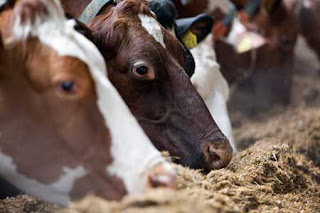 Good quality forage should always be the basis of any ration, and when quality and/or quantity of forage dry matter intake is reduced, then cows can struggle to perform.
Cows can also have a higher risk of Sub Acute Ruminal Acidosis (SARA), especially if the shortfall in forage energy intake is being met with higher levels of starchy cereals .
Studies have shown that SARA can be responsible for a loss in milk yield of up to 3 litres/cow/day. Paul Sloan, a nutritionist said "A ration done on a computer is no substitute for getting in among the cows."“It’s even more important to get the best out of the total ration and in particular producers need to make the best use of their silage.”
It is important to walk through the cows regularly and observe their behaviour at both feeding and resting times, as this can tell you a lot about how the ration is performing.
Blends need to be correctly balanced with good levels of cereals to drive performance, and they should contain only quality raw materials with no filler type feeds.
Getting the right level of energy and starch is important, and maize meal is a key ingredient as it has lower starch degradability to help reduce acid loading in the rumen.
Good fiber sources such as soya hulls and sugar beet pulp should also be included to help balance the ration and maintain rumen health.
Sloan says, “Maintaining rumen health is the key and we have added live yeast to most of our rations this winter to help promote rumen function.
Live yeast improves fiber digestion and with the higher levels of fiber in this year’s silage the yeast is an important addition. The live yeast also helps reduce levels of lactic acid in the rumen, therefore helping to reduce the acid loading and maintain a healthier rumen environment.
By taking this approach we have also seen significant reductions in laminitis-related feet problems.” Researchers Krause and Oetzel (2006) have shown that when frequent bouts of SARA occur, it can increase the risk of damage to the lining of the rumen wall.
As pH drops, the normal balance of the rumen flora is disrupted and gram negative bacteria lyse, releasing endotoxins.
As a result of the damaged rumen lining, bacteria and toxins from the rumen can then easily enter the blood stream which can lead to liver damage and an inflammatory response within the animal.
These toxins in the blood stream can also increase the risk of laminitis .Live yeast can help to reduce the risk of SARA occurring by helping to maintain the rumen pH at a higher level
.In addition to helping stabilize and raise rumen pH, live yeast will scavenge oxygen in the rumen, making the conditions more anaerobic, and certain nutrients are also produced by the yeast which helps to stimulate fiber digestion. story credit; all about feed.
 Good quality forage should always be the basis of any ration, and when quality and/or quantity of forage dry matter intake is reduced, then cows can struggle to perform.
Cows can also have a higher risk of Sub Acute Ruminal Acidosis (SARA), especially if the shortfall in forage energy intake is being met with higher levels of starchy cereals .
Studies have shown that SARA can be responsible for a loss in milk yield of up to 3 litres/cow/day. Paul Sloan, a nutritionist said "A ration done on a computer is no substitute for getting in among the cows."“It’s even more important to get the best out of the total ration and in particular producers need to make the best use of their silage.”
It is important to walk through the cows regularly and observe their behaviour at both feeding and resting times, as this can tell you a lot about how the ration is performing.
Blends need to be correctly balanced with good levels of cereals to drive performance, and they should contain only quality raw materials with no filler type feeds.
Getting the right level of energy and starch is important, and maize meal is a key ingredient as it has lower starch degradability to help reduce acid loading in the rumen.
Good fiber sources such as soya hulls and sugar beet pulp should also be included to help balance the ration and maintain rumen health.
Sloan says, “Maintaining rumen health is the key and we have added live yeast to most of our rations this winter to help promote rumen function.
Live yeast improves fiber digestion and with the higher levels of fiber in this year’s silage the yeast is an important addition. The live yeast also helps reduce levels of lactic acid in the rumen, therefore helping to reduce the acid loading and maintain a healthier rumen environment.
By taking this approach we have also seen significant reductions in laminitis-related feet problems.” Researchers Krause and Oetzel (2006) have shown that when frequent bouts of SARA occur, it can increase the risk of damage to the lining of the rumen wall.
As pH drops, the normal balance of the rumen flora is disrupted and gram negative bacteria lyse, releasing endotoxins.
As a result of the damaged rumen lining, bacteria and toxins from the rumen can then easily enter the blood stream which can lead to liver damage and an inflammatory response within the animal.
These toxins in the blood stream can also increase the risk of laminitis .Live yeast can help to reduce the risk of SARA occurring by helping to maintain the rumen pH at a higher level
.In addition to helping stabilize and raise rumen pH, live yeast will scavenge oxygen in the rumen, making the conditions more anaerobic, and certain nutrients are also produced by the yeast which helps to stimulate fiber digestion. story credit; all about feed.
Subscribe to:
Comments (Atom)
Agribusiness Millionaires

Learn how to make money in agribusiness.
Claim your bonus here..

Free dog care guide.
CASSAVA BUSINESS

CASSAVA FLAKES.