
Tuesday, December 8, 2015

PATHOGEN DETECTION USING LASER.
 The technology is based on elastic light scatter(ELS),it uses laser to fire at a colony on an agar plate and the light scatter that it produces a pattern used for identification. Read more about the technology here;http://www.foodqualitynews.com/R-D/Hettich-and-Purdue-present-elastic-light-scatter-technology/?utm_source=Newsletter_Subject&utm_medium=email&utm_campaign=Newsletter%2BSubject&c=
DISEASE PREVENTION IN POULTRY FARMS.
Bio security is a set of protocols that are simple but specific that positively influence animal health,public health and ensure food safety.
Personal hygiene plays a vital role in disease prevention; the use of protective clothing and shoes is a major way to stay safe and keep flock clean. The protective clothing could be disposable or re use-able and the level protection required will depend on the case at hand.
The normal protective clothing for every day farm use include, the overalls,gloves and boots.The level of protection becomes more sophisticated in outbreak cases, where disposable protective clothing are worn with the use of nose guards/respirators.
. The use of protective clothing and boots is complemented with hand washing and disinfection. The clothes and boots are to be washed ,and disinfected after every use.
HAND WASHING: this can be achieved with soap and disinfectants.The wash bowls should be placed at key points in the farm,and washing should be done before you enter farm and handle birds.
Alcohol swipes also come in handy after washing, these can be used to ensure the hands are clean and germ free.
 Foot dip: vats filled with disinfectant and placed at entrance of farms. The disinfectants should be changed at regular intervals.


Personal hygiene plays a vital role in disease prevention; the use of protective clothing and shoes is a major way to stay safe and keep flock clean. The protective clothing could be disposable or re use-able and the level protection required will depend on the case at hand.
The normal protective clothing for every day farm use include, the overalls,gloves and boots.The level of protection becomes more sophisticated in outbreak cases, where disposable protective clothing are worn with the use of nose guards/respirators.
. The use of protective clothing and boots is complemented with hand washing and disinfection. The clothes and boots are to be washed ,and disinfected after every use.
HAND WASHING: this can be achieved with soap and disinfectants.The wash bowls should be placed at key points in the farm,and washing should be done before you enter farm and handle birds.
Alcohol swipes also come in handy after washing, these can be used to ensure the hands are clean and germ free.
 Foot dip: vats filled with disinfectant and placed at entrance of farms. The disinfectants should be changed at regular intervals.


BIO SECURITY MEASURES FOR SUCCESS IN THE POULTRY VALUE CHAIN.
BIOSECURITY.
Following simple but specific protocols everyday to positively influence animal health, food safety and public health.
What are the basic protocols in biosecurity?
Biosecurity basically entails, prevention of pathogens from entering premises to ensure there is no disease incidence, and curtail spread of diseases in cases of outbreaks.
Pathogens are disease causing microorganisms that usually have devastating effect on animals, resulting in decreased production and death in severe cases.
Pathogens can be bacteria, viruses, fungi and prion.
Pathogens .
The animal kingdom is riddled with several pathogens that wreck havoc on these animals irrespective of specie.
These pathogens are also of importance to man, especially when these cause zoonotic diseases.
Zoonotic diseases are spread from animals to man, and sometimes there is a reverse zoonoses where man actually spreads the disease to their animals.
Route of transmission.
The basic routes are:
Direct contact.
Aerosol.
Oral.
Fomites.
Vector borne
Zoonoses.
Reproduction.
Environmental contamination.
Mode of transmission.
Direct contact ;disease spread by contact with open wounds, mucous membrane of an infected animal or its secretions/tissue fluids. Disease can also spread through contact with reproductive fluid(blood, urine and saliva) during breeding, or from mother to offspring.
Aerosol; droplets containing the pathogenic agent travel in air and are inhaled as respiratory droplets by animals
Oral; ingestion of the pathogenic agent from contaminated feed ,chewing/licking contaminated objects in environment and water.
Fomites; spread of the pathogen through contact with inanimate objects contaminated by infected animals. Man can act as fomites by transferring these pathogens in through soiled boots, gloves or tools.
Vector; some insects transfer these pathogens from one animal to another through bites.
Zoonoses; these pathogens are transferred from animals to man.
Environmental contamination is key in transmission as some of these pathogens remain infective in the environment for specific periods, thus establishing a foci of infection the area .
Biosecurity procedures
These are simple ,everyday practices to prevent entry of diseases and spread of diseases.
The protocol must be tailored to your farm setting, the type of pathogens affecting your type of animals and public health implication.
The basic biosecurity plan can be broadly divided into 1) isolation,2) cleaning and disinfection 3) waste disposal.
The chemicals to be used will depend on the targeted pathogen,to ensure we get result.
Steps in biosecurity.
Isolation.
Isolation; this refers to keeping these pathogens out by following these steps 1)wearing personal protective equipment which could be disposable or reusable. These include boots, gloves, outer wear and masks/nose guards.
Provision of clean, sterilized clothes.
Prevent entry into animal housing.
Quarantine new animals to farm for at least a month.
Creation of a safe zone in the premises, where there visitors such as veterinarians can change to protective clothing before they have access to animal housing.
Isolate sick animals .
Screen farm premises to prevent entry of wild animals, birds, rodents and reptiles.
Cleaning, washing and disinfection.
Cleaning ,washing and disinfection; cleaning refers to removing debris, dirt and waste from animal housing prior to washing with soap/detergent and then disinfecting the premises.
This procedure also done for tools and implements. Egg trays, feeders/drinkers are also cleaned, washed and disinfected.
Foot bath/tyre dips are also classed here; where there is a provision of a foot dip with disinfectants at the entrance of the animal housing, while the tyres of vehicles coming to the facility are sprayed with disinfectant.
Hand washing points must be on the premises; when you come in you wash hands and sanitize hands.
Water sources such as tanks, containers are washed and sanitized
Waste disposal.
Waste disposal/handling is a major route of spread of diseases, thus biosecurity practices must include proper management.
Waste should be packed at regular intervals and treated with appropriate chemicals/disinfectants before disposal. This is to ensure that what ever pathogen is in the waste does not persist in the environment.
When waste is to be used as manure, these should be bagged and stored neatly, and the area constantly cleaned. Composting the waste in a secluded section on farm is the best practice.
Disinfectants
The disinfectant to be used in animal facility must be non corrosive, non irritating, does not taint equipment, non toxic, have wide spectrum of use and easy to use.
There are basically 9groups that are of benefit; aldehyde group, quaternary ammonium, oxidizing agents , alcohol, hypochlorites,phenols,iodophors, chlorhexidene and peroxide.
The disinfectant of choice will depend on the pathogen in question and nature of case.
Thank you.


MORE BIRD FLU OUTBREAKS IN FRANCE!!!
 FRANCE - Following the detection of three avian influenza outbreaks in Dordogne, three more outbreaks have been confirmed in Landes and Dordogne.
The new outbreaks were detected after increased surveillance was put into place across France, including active surveillance of clinical signs of avian influenza in sensitive species. Abnormal mortality levels detected by farmers have also led to systematic sampling. The confirmed outbreaks, which took place in guinea fowl and ducks in Landes and ducks in Dordogne, a press release from the French agriculture ministry said that other outbreaks were suspected. Protection zones, surveillance, biosecurity and stamping out of the disease on the affected farms have been used to try and prevent the virus spreading.
The issue of biosecurity with active surveillance is key to curb the spread of the virus and the issue of early reporting when there is a high number of mortality with a short period ,is also very important.
story credit; poultry site.
FRANCE - Following the detection of three avian influenza outbreaks in Dordogne, three more outbreaks have been confirmed in Landes and Dordogne.
The new outbreaks were detected after increased surveillance was put into place across France, including active surveillance of clinical signs of avian influenza in sensitive species. Abnormal mortality levels detected by farmers have also led to systematic sampling. The confirmed outbreaks, which took place in guinea fowl and ducks in Landes and ducks in Dordogne, a press release from the French agriculture ministry said that other outbreaks were suspected. Protection zones, surveillance, biosecurity and stamping out of the disease on the affected farms have been used to try and prevent the virus spreading.
The issue of biosecurity with active surveillance is key to curb the spread of the virus and the issue of early reporting when there is a high number of mortality with a short period ,is also very important.
story credit; poultry site.
Monday, December 7, 2015
LYME DISEASE.
Lyme disease is the most common vector-borne illness . The spirochete, which causes the disease, is transmitted by Ixodes ticks, For a person to develop Lyme disease, he or she must be bitten by an infected tick and the organism is transmitted only if the tick is infected and if the tick feeds long enough for more than 36 hours.
The major sign in early localized Lyme disease is the bull’s eye rash: erythema migrans. The rash begins at the tick bite site and expands over days to reach diameters in excess of 5 cm. Generally, the border of the rash is erythematous, with central clearing, although at times the center is erythematous or even purplish. Fever, malaise, aches and pains often accompany the rash. The rash resolves with or without antibiotic therapy. Some patients will develop early disseminated disease in which there are multiple erythema migrans. Cranial nerve palsies, most often the seventh nerve, may occur in this stage. Aseptic meningitis occurs in some patients and can be difficult to distinguish from viral meningitis. However, the onset is generally more insidious than viral meningitis. Carditis occurs in this stage but is rare in children; carditis presents as heart block. Late disease is characterized by arthritis, generally Central nervous system disease and peripheral neuropathy are rare manifestations of late Lyme disease.
Prevention relies on avoidance of tick bites or prompt removal of the tick before transmission of the spirochete occurs. Ticks are most common in high grass or weeds. In general, if you can see your shoes, you are not likely to be bitten. This was shown in a study of golfers that correlated likelihood of Lyme disease with time spent in the rough. Tick checks are important so that the tick can be removed promptly. Lyme disease treatment ;Treatment depends upon the stage of the infection. For children aged 8 years and older, doxycycline is given for 2 to 3 weeks; amoxicillin is used in younger children or those who cannot tolerate doxycycline. Parenteral therapy is reserved for patients with persistent arthritis or meningitis; however, many experts would consider repeating an oral course of antibiotics for arthritis and using doxycycline for meningitis. As with many infections, symptoms often persist after completion of an effective antibiotic course. There is no evidence that prolonged antibiotic courses are needed or are helpful.
read more here; http://www.healio.com/pediatrics/news/print/infectious-diseases-in-children/%7B77a7f447-979e-4655-9993-fd4dab45e8f0%7D/lyme-disease-staying-on-track
Lyme disease treatment ;Treatment depends upon the stage of the infection. For children aged 8 years and older, doxycycline is given for 2 to 3 weeks; amoxicillin is used in younger children or those who cannot tolerate doxycycline. Parenteral therapy is reserved for patients with persistent arthritis or meningitis; however, many experts would consider repeating an oral course of antibiotics for arthritis and using doxycycline for meningitis. As with many infections, symptoms often persist after completion of an effective antibiotic course. There is no evidence that prolonged antibiotic courses are needed or are helpful.
read more here; http://www.healio.com/pediatrics/news/print/infectious-diseases-in-children/%7B77a7f447-979e-4655-9993-fd4dab45e8f0%7D/lyme-disease-staying-on-track
 Lyme disease treatment ;Treatment depends upon the stage of the infection. For children aged 8 years and older, doxycycline is given for 2 to 3 weeks; amoxicillin is used in younger children or those who cannot tolerate doxycycline. Parenteral therapy is reserved for patients with persistent arthritis or meningitis; however, many experts would consider repeating an oral course of antibiotics for arthritis and using doxycycline for meningitis. As with many infections, symptoms often persist after completion of an effective antibiotic course. There is no evidence that prolonged antibiotic courses are needed or are helpful.
read more here; http://www.healio.com/pediatrics/news/print/infectious-diseases-in-children/%7B77a7f447-979e-4655-9993-fd4dab45e8f0%7D/lyme-disease-staying-on-track
Lyme disease treatment ;Treatment depends upon the stage of the infection. For children aged 8 years and older, doxycycline is given for 2 to 3 weeks; amoxicillin is used in younger children or those who cannot tolerate doxycycline. Parenteral therapy is reserved for patients with persistent arthritis or meningitis; however, many experts would consider repeating an oral course of antibiotics for arthritis and using doxycycline for meningitis. As with many infections, symptoms often persist after completion of an effective antibiotic course. There is no evidence that prolonged antibiotic courses are needed or are helpful.
read more here; http://www.healio.com/pediatrics/news/print/infectious-diseases-in-children/%7B77a7f447-979e-4655-9993-fd4dab45e8f0%7D/lyme-disease-staying-on-track
Boost yield and product quality by combining injecting and massaging
THE APPROPRIATE INJECTION PATTERN
The GEA YieldJector's dense injection pattern gives more than twice the injection points of a conventional injector, providing the highest number of injection points in its class. This optimizes brine distribution, also under and around the bone. GEA injectors offer this possibility because it features injection heads with individual needles that retract when hitting a bone, further increasing the needle-in-meatratio.
Marinating bone-in and skin-on poultry products like wings, drumsticks, thighs, legs and whole or half birds adds flavor and boosts value. Traditionally this is carried out using tumbling only. Not only this is a time-consuming batch process, but it also leads to wet products at the outfeed and unsightly effects like skin slip. Combining injecting and massaging in the GEA Fresh enhanced line overcomes these drawbacks. GEA Food Solutions has a complete solution to increases efficiency, produce a more appetizing looking product and boost yield by up to 4%.
Injecting
AccuJector with chicken wings on belt
Bone-in and skin-on poultry parts present specific challenges for injection. Conventional needles have a tendency to break or deform when they hit bone, whereas larger diameters needles leave visible marks in the skin and damage the bone. To overcome these drawbacks, the poultry parts injection solution incorporates a GEA YieldJector, which has an exceptionally high number of injection points and works with sharp, small diameter GEA OptiFlex needles.
appearance and an improvement in processing efficiency. Frying/Cooking/Roasting
GEA CookStar_Outfeed with chicken legs
Yield is most influenced by weight loss during further processing. The better the brine distribution and the lower the deviation between products, the higher the potential yield and capacity during the frying, cooking and/or roasting processes. Add to this the optimal frying control and oil filtration of the GEA EasyFry and the precisely controlled cooking process of the GEA CookStar and you benefit from the best possible processing efficiency.
 Read more here;http://www.gea.com/global/en/articles/bone-in-poultry/index.jsp
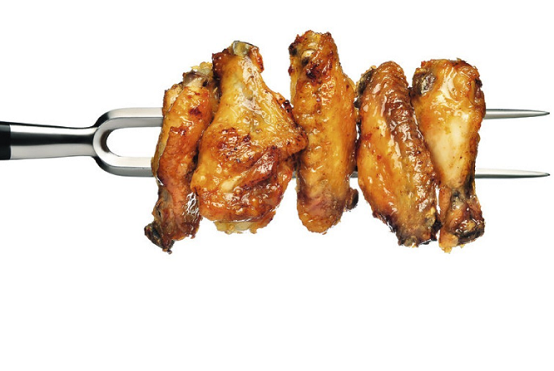
 Read more here;http://www.gea.com/global/en/articles/bone-in-poultry/index.jsp
Researchers seek cure for deadly laminitis hoof disease in horses.
 team of ponies has been helping Australian researchers search for the cause and cure for the costly, common and incurable equine disease, laminitis.The disease is the second-biggest killer of horses, a painful and potentially deadly hoof condition that affects thousands of horses a year.The groundbreaking research triggered a joint multi-million-dollar project by the Queensland University of Technology (QUT), the University of Queensland, Melbourne University and Charles Sturt University in New South Wales.The science has returned positive results and researchers said a preventative treatment could be within reach.
The cause of the disease was hotly debated,until 5 years ago when high insulin levels are to blame. Professor Sillence has headed the team that has proved that in most cases, high insulin levels are to blame.He said in horses prone to laminitis, or founder as it is more commonly known, sweet feed was shown to trigger toxic levels of the hormone.The most common form of laminitis that affects ponies and horses that are on rich pasture, is certainly down to excess levels of insulin in the blood - it's like human diabetes," he said. Professor Sillence said genetic predisposition, over-feeding and a lack of exercise also played a part. "The difference is the horses' pancreas never fails and pumps out massive amounts of insulin until it causes this devastating result, which is when the hooves start to come apart from the legs," he said.
Case study; Horse owner Errol Maudsley said he always suspected his daughter's pony, Coco, might have been prone to founder because of his round stature.He said they had always managed him accordingly."We lock him up and restrict how much he eats, but after all the rain he caught us out and he actually foundered - it's just access to so much feed," he said. In Coco's case, it was caught early and treated, but Mr Maudsley said management would be ongoing."Forever - now that we know he's prone - we'll have to watch him all the time," he said.
read more here;http://www.abc.net.au/news/2015-05-14/researchers-hope-to-find-cure-to-laminitis-disease-in-horses/6471000
team of ponies has been helping Australian researchers search for the cause and cure for the costly, common and incurable equine disease, laminitis.The disease is the second-biggest killer of horses, a painful and potentially deadly hoof condition that affects thousands of horses a year.The groundbreaking research triggered a joint multi-million-dollar project by the Queensland University of Technology (QUT), the University of Queensland, Melbourne University and Charles Sturt University in New South Wales.The science has returned positive results and researchers said a preventative treatment could be within reach.
The cause of the disease was hotly debated,until 5 years ago when high insulin levels are to blame. Professor Sillence has headed the team that has proved that in most cases, high insulin levels are to blame.He said in horses prone to laminitis, or founder as it is more commonly known, sweet feed was shown to trigger toxic levels of the hormone.The most common form of laminitis that affects ponies and horses that are on rich pasture, is certainly down to excess levels of insulin in the blood - it's like human diabetes," he said. Professor Sillence said genetic predisposition, over-feeding and a lack of exercise also played a part. "The difference is the horses' pancreas never fails and pumps out massive amounts of insulin until it causes this devastating result, which is when the hooves start to come apart from the legs," he said.
Case study; Horse owner Errol Maudsley said he always suspected his daughter's pony, Coco, might have been prone to founder because of his round stature.He said they had always managed him accordingly."We lock him up and restrict how much he eats, but after all the rain he caught us out and he actually foundered - it's just access to so much feed," he said. In Coco's case, it was caught early and treated, but Mr Maudsley said management would be ongoing."Forever - now that we know he's prone - we'll have to watch him all the time," he said.
read more here;http://www.abc.net.au/news/2015-05-14/researchers-hope-to-find-cure-to-laminitis-disease-in-horses/6471000
THE THREAT OF LYME DISEASE.
Lyme disease, a tick-borne illness that in its most serious form can result in chronic fatigue, pain, confusion, depression-like symptoms and memory loss. The number of cases appear to be rising include a growing number of ticks in some weather conditions; more wild mammals that host them; an increase in the number of visitors to areas where they live; and greater awareness leading to more diagnosis.
The disease is spreading through the population of ticks and animals are picking it up thus so more and more people are contracting the disease. Britain has recorded a rise this summer , a case scenario; Laura ;One patient who had to wait more than three years for treatment was Laura, who has asked that only her first name be used.In January 2012 she noticed a red bullseye rash on her right shin. The rash is the most distinctive feature of Lyme disease, but Laura was not aware of that. A couple of months later, she said, she began to feel “foggy, confused, forgetful”, and it was “hard to make decisions, hard to think, hard to read, hard – pretty much – to use my brain”.Despite living close to Richmond Park in west London, where Lyme disease is known to exist, Doctors thought the most likely cause was chronic fatigue. Months passed during which Laura gave up her job as a civil servant to focus what energy she had on her two primary school age children.The turning point was when Laura read an article about Lyme disease and recognized a picture of the erythema migrans rash. A blood test came back negative, but this was not decisive: medics test not for the bacterial infection but for the anti-bodies that the body makes to fight it, so patients tested too soon or too late will often not record a positive result.
A specialist was “confident” it was Lyme disease, though cautioned it was too late to treat it with antibiotics. Laura pressed for a lumbar puncture, which showed she had an inflamation of the brain - another indicator she possibly had the illness.This summer she was finally given antibiotics, which she said “seemed to help”. She is now working in a local school. story credit; the guardian.
Sunday, December 6, 2015
NEWCASTLE OUTBREAK IN ROMANIA.
 Romania has reported an outbreak of Newcastle disease for the first time since 2007. Where over 500 birds died in a flock of laying hens in Bucov, Prahova. Another 1070 birds were destroyed to prevent the outbreak from spreading. Romania's report to the World Organisation for Animal health described the affected farm as 'non-commercial, and said the birds were aged seven and a half months. They were vaccinated at 1 and 3 weeks old with a live attenuated vaccine, administered orally.
The country has culled all affected birds and has initiated a surveillance to facilitate tracing and tracking of birds and also institute control measures in cases of outbreak.
story courtesy; poultry site.
Romania has reported an outbreak of Newcastle disease for the first time since 2007. Where over 500 birds died in a flock of laying hens in Bucov, Prahova. Another 1070 birds were destroyed to prevent the outbreak from spreading. Romania's report to the World Organisation for Animal health described the affected farm as 'non-commercial, and said the birds were aged seven and a half months. They were vaccinated at 1 and 3 weeks old with a live attenuated vaccine, administered orally.
The country has culled all affected birds and has initiated a surveillance to facilitate tracing and tracking of birds and also institute control measures in cases of outbreak.
story courtesy; poultry site.
Saturday, December 5, 2015


Friday, December 4, 2015
HENDRA VIRUS, HORSES AND HORSE OWNERS.
The Hendra virus is a virus that mainly infects fruit bats also called flying foxes which can be passed on to horses, people and other animals. The virus is a deadly zoonoses. Hendra virus is very fragile. It is easily killed by heat, soap or detergents and by desiccation (drying out). It may survive in the environment from several hours to several days depending on environmental conditions. Survival is longer in cool moist conditions where the pH is close to neutral.
Horses can shed Hendra virus before they show any sign of illness. All horse handlers should protect themselves by routinely using good hygiene practices whenever handling horses.Always cover any cuts exposed skin before handling your horse. Always wash your hands with soap and water, particularly after handling your horse's mouth or nose. Do not smoke, eat or touch your eyes, nose or mouth until you have washed your hands, every time you put a bridle on or take it off you are likely to contact the horse's saliva.
The Hendra virus should be suspected whenever a horse's health deteriorates rapidly. The symptoms in horses include a sudden fever with a respiratory or neurological illness and rapid death, laboured breathing ,frothy and/or blood stained nasal discharge ,a temperature above 40 degreesC. The neurological changes are tilting of the head, loss of vision, abnormal muscle twitching, weakness and loss of balance. Some horses show colic symptoms.
What to do when horses have been confirmed to have the virus; 1)quarantine. 2) protective clothing .Everyone handling a sick horse must wear full protective clothing. Protective clothing must be fitted correctly. Put on protective clothing before approaching the horse.After handling the horse, remove and dispose of protective clothing  carefully into waste bags, making sure there is no contact with your face, particularly your eyes, mouth and nose.Carefully remove any clothing contaminated with the horse's body fluids.
Wash your hands thoroughly after removing the protective clothing and horse owners should always have a protective clothing for safety.
Vaccination of horses is very important.
carefully into waste bags, making sure there is no contact with your face, particularly your eyes, mouth and nose.Carefully remove any clothing contaminated with the horse's body fluids.
Wash your hands thoroughly after removing the protective clothing and horse owners should always have a protective clothing for safety.
Vaccination of horses is very important.
 carefully into waste bags, making sure there is no contact with your face, particularly your eyes, mouth and nose.Carefully remove any clothing contaminated with the horse's body fluids.
Wash your hands thoroughly after removing the protective clothing and horse owners should always have a protective clothing for safety.
Vaccination of horses is very important.
carefully into waste bags, making sure there is no contact with your face, particularly your eyes, mouth and nose.Carefully remove any clothing contaminated with the horse's body fluids.
Wash your hands thoroughly after removing the protective clothing and horse owners should always have a protective clothing for safety.
Vaccination of horses is very important.
SIGNS OF BIRD FLU IN MAN.
The bird flu virus has been know to affect man and causing death in some of those affected.The major means of infection is close contact with affected poultry such as handling and processing .The issue of bio security on farms can not be over emphasized, the use of foot dips,tyre dips and hand washing with stipulated disinfectants are essential for safety.The procurement of healthy birds from reliable sources is also vital in the biosecurity protocol.
The incubation period is usually 3-7 days after contact with infected poultry.
Signs include;A sudden high temperature of 38C or above,a dry, chesty cough, headache, tiredness,inappetence, sore throat, runny nose, muscle and joint pain, stomach upset, diarrhoea and sore throat.
The other signs include pneumonia, respiratory distress which is followed by multiple organ failure resulting in death.
Prevention; 1) wash hands after handling poultry.
2) avoid contact with wild birds.
read more
JAPAN BANS POULTRY IMPORTS FROM FRANCE.
 Japan, the largest importer of French foie gras, bans poultry imports after bird flu outbreak in Dordogne;China, South Korea, Thailand, Egypt, Morocco, Algeria and Tunisia have banned French poultry imports and several other countries are considering doing so, according to Loïc Evain of the French agriculture ministry.
Containment and protection measures are in force within a six-mile radius of the three farms affected near the village of Biras, between Périgueux and Brantôme.
Entire flocks have been culled. About 1,000 geese and 14,000 ducks were electrocuted earlier this week in special trucks so the dead birds can be removed with minimum contamination. The farms are still being disinfected.
Japan, the largest importer of French foie gras, bans poultry imports after bird flu outbreak in Dordogne;China, South Korea, Thailand, Egypt, Morocco, Algeria and Tunisia have banned French poultry imports and several other countries are considering doing so, according to Loïc Evain of the French agriculture ministry.
Containment and protection measures are in force within a six-mile radius of the three farms affected near the village of Biras, between Périgueux and Brantôme.
Entire flocks have been culled. About 1,000 geese and 14,000 ducks were electrocuted earlier this week in special trucks so the dead birds can be removed with minimum contamination. The farms are still being disinfected. story credit; Telegraph
CAT FITTED WITH TITANIUM LEGS.
 A 3-year-old domestic short-haired cat named Vincent, whose hind legs are high-tech prosthetics, may soon be leaping for the tops of couches, counter-tops, and other high places he'd like to visit.He can't jump just yet, but that shouldn't be far behind. "I anticipate that he’ll be jumping and doing really normal cat things very soon," said Mary Sarah Bergh in a press release. The veterinary orthopedic surgeon and professor from Iowa State implanted the cat's titanium legs and is in charge of his post-operative care.
The cat's weight is supported by the titanium shafts, which go upward, inside his bones. Subsequent procedures will gradually lengthen his legs, and eventually they will be the length of a normal cat's hind legs.Because the shafts are exposed to the environment, Vincent needs to receive antibiotic spray treatments twice a day, but otherwise all systems seem to be go for the special feline. He'll be looking down from high places soon enough.
story credit; discovery news.
A 3-year-old domestic short-haired cat named Vincent, whose hind legs are high-tech prosthetics, may soon be leaping for the tops of couches, counter-tops, and other high places he'd like to visit.He can't jump just yet, but that shouldn't be far behind. "I anticipate that he’ll be jumping and doing really normal cat things very soon," said Mary Sarah Bergh in a press release. The veterinary orthopedic surgeon and professor from Iowa State implanted the cat's titanium legs and is in charge of his post-operative care.
The cat's weight is supported by the titanium shafts, which go upward, inside his bones. Subsequent procedures will gradually lengthen his legs, and eventually they will be the length of a normal cat's hind legs.Because the shafts are exposed to the environment, Vincent needs to receive antibiotic spray treatments twice a day, but otherwise all systems seem to be go for the special feline. He'll be looking down from high places soon enough.
story credit; discovery news.
CATERPILLAR-INDUCED ABORTIONS IN MARES.
New research is underway in the Hunter Valley to try to reduce the number of abortions in horses caused by a species of caterpillar.University of Queensland researcher Julianne Farrell is carrying out field studies at several Upper Hunter studs, focussing on the hairs from the processionary caterpillar.
Studs have addressed the problem by keeping mares away from the caterpillar and its nest.Ms Farrell said the racing industry is hoping the three-year study sheds light on the issue."That's why the racing industry has funded this project," she said.
When service to a highly prized stallion is so expensive, you don't want to lose a foal halfway through the pregnancy."So it's in everyone's best interests that we sort out how we can possibly keep the mares and the caterpillars apart."Ms Farrell said controlling the caterpillar is proving challenging."What we'd like to provide is someway of keeping these caterpillars and the pregnant mares apart," she said."To keep the breeders and the stud owners in the Hunter Valley, and elsewhere where there are lots of thoroughbreds studs, happy.
But it's not just the thoroughbreds affected - it's all sporting and performance horses that can also be affected."Scone vet Cameron Collins said the caterpillar has wreaked havoc during breeding seasons."We believe that processionary caterpillar related abortions may be responsible for up to 20 to 25 per cent of the abortions we see," he said.
"What we find is the caterpillars live in nests in the trees," he said."The nest grows as the caterpillars grow, and shed their skin, full of caterpillar excretions."If that nest is disturbed, all of that exoskeleton material is distributed across the paddock, then the horses can be exposed to the contents of those nests, and that's when we think the problem occurs."It's a matter of identifying those nests and then disposing of them safely.
Story courtesy; http://www.abc.net.au/news/2015-05-29/research-at-hunter-horse-studs-to-prevent-caterpillar-induced-a/6505708

VETERINARIANS AND BIOSECURITY PROTOCOLS.
 Veterinarians are often exposed to diseases that could be fatal, and this exposure has also been linked to further spread of infectious agents to other farms.The safety protocol for the vet and animals must be ensured for safety.
Bio security protocols are very important,and to this end training of vets and para-vets on these protocols are necessary.
Diseases are emerging every time and others evolving, safety is necessary as more and more exposure cases are known and so many unreported and a lot more undiagnosed.
The health status of the vets are important just as that of the animals.Food animals ,companion animals and wildlife all poise a threat; safety is the watch word.
Training on biosecurity protocols, use of latest disinfectants must be periodical and livestock owners should also know basic safety protocol.
Vets up-skill to prepare for future animal infectious disease emergencies in a bid to better manage future outbreaks of animal disease like avian influenza, foot-and-mouth disease and Hendra virus, veterinarians convened in Canberra for a hands-on training exercise.
"Part of the training is to condition people to what actually happens, so it doesn't take them by surprise," he said. Dr Will Andrew"It gives them assurance of their procedure and that takes the pressure off people.
"Vets were presented with a host of disinfectant and quarantine protocols."If you go and visit a property and you don't carry out some of these procedures you run the risk, particularly as a vet, when you visit the next property of taking that disease with you," Dr Andrew said.
Viruses that spread from animals to humans are on the rise.
Viruses that develop in animals and can spread to humans are on the rise around the world and scientists say more research is needed to prevent them from evolving.
Viruses that pose a risk to both human and animal health are known as zoonotic diseases.The more severe examples include ebola in west Africa, Middle East Respiratory Syndrome (MERS) in the Arabian Peninsula, Severe Acute Respiratory Syndrome (SARS) in Asia, and even Hendra in Australia.
The University's Dr Siobhan Mor has just completed a study into how much scientists know about such animal diseases before they develop.She said half of the data that exists focuses on known zoonotic diseases, and there is a lack of information on animal viruses that have the potential to develop into human ones."We identified 10 diseases that occur at the livestock-wildlife interface, majority of which also affect humans, and found that the majority of the research has been occurring on these [10] particular diseases since the 1960s," Dr Mor said."There has been a lot of research on these particular diseases, with far less on other diseases occurring."Dr Mor said the findings are concerning, given animal diseases could pose a greater risk to human health as livestock production systems become more intensive."We are seeing more diseases occurring now in people as a result of those livestock systems and the way we are producing human food," she said.We are seeing more diseases occurring now in people as a result of those livestock systems and the way we are producing human food. Dr Siobhan Mor, University of Sydney, "We are raising animals in close proximity to wildlife because we have cleared land in order to make way for our agricultural production."
Dr Mor said sometimes new diseases are detected in humans first, which are later found to have initially developed in animals, such as HIV."Historically, we know that HIV comes from animals, but what the research shows is there are increasingly new diseases being found in humans and we later determine have been occurring in animals as well."Dr Mor said Severe Acute Respiratory Syndrome, or SARS, is a more modern example of an animal disease that has become more problematic for humans in recent decades."I think everyone's eyes are on viruses known as coronaviruses," she said.
Zoonotic diseases have become more publicised recently with the west African ebola outbreak, which has so far killed more than 10,000 people.Fruit bats are thought to be the natural hosts of the ebola virus, as is also the case with the deadly Hendra virus in Australia. Hendra has infected seven Australians and killed four, as well as countless horses, since it was first recorded in the Brisbane suburb of Hendra in 1994.
Dr Mor said human Hendra cases demonstrated a need to understand more about bats, which are linked to a number of zoonotic diseases. "Bats are really interesting and we now know they harbour many germs which can make people very sick,"
Read more here; http://www.abc.net.au/news/2015-07-21/researchers-say-more-information-is-needed-zoonotic-diseases/6635738
"Bats are really interesting and we now know they harbour many germs which can make people very sick,"
Read more here; http://www.abc.net.au/news/2015-07-21/researchers-say-more-information-is-needed-zoonotic-diseases/6635738
 "Bats are really interesting and we now know they harbour many germs which can make people very sick,"
Read more here; http://www.abc.net.au/news/2015-07-21/researchers-say-more-information-is-needed-zoonotic-diseases/6635738
"Bats are really interesting and we now know they harbour many germs which can make people very sick,"
Read more here; http://www.abc.net.au/news/2015-07-21/researchers-say-more-information-is-needed-zoonotic-diseases/6635738
ELECTRICITY FROM WASTE!!!
Waste is generated from our activities everyday.The choice of waste management depends on the people involved and the innovation prowess of those involved.Waste management is a global issue and as such numerous efforts are put in place to ensure a cleaner and safer environment.
Waste generated from animals,food and humans can be processed using a biodigester and the gas generated used as electricity and cooking fuel. The electricity crisis is in every nation,with most developed nations thinking of how to cut energy costs by sourcing for alternatives, the developing and underdeveloped nations do not have enough energy,thus also looking for ways to provide electricity for all. Solar, and other energy have been used,but that which is most currently explored is electricity from waste.
The benefits of biogas are enormous; see how a farmer is making use of it.
Ta Quang Nah is a Vietnamese rice farmer, pig breeder, builder and fisherman. But for several months now he has also been running a power station from his home on the Ca Mau peninsula.All the family’s waste goes straight from their outdoor latrine to join that of their four pigs in an airtight underground chamber, and the methane gas that is naturally let off as the combined excreta decomposes collects in a long polythene bag secured above ground.
Ta Quang Nah was advised by Oxfam how to set up his family biodigester, and when I met him last month he was proudly cooking on his own gas, and saving money by not buying wood or charcoal. His simple operation cost less than $50 to instal, paid itself off in a few months, needs little maintenance and is more than big enough for his family’s needs. Dozens of his neighbours want one too.
Using vegetable or livestock waste to generate biogas is now common and growing fast as cattle farmers and food companies in Europe and the US are encouraged with subsidies to set up anaerobic, or airless, digesters like Ta Quang Nah’s rudimentary one. But using human waste is still largely taboo outside Asia.( story; the guardian)
Housing estates stand to benefit from this; where all the waste generated is passed to a central collecting point, then to the biodigester for processing.The electricity produced can be passed to grid,thus reducing cost of electricity and also ensuring that power is always available.The plant can also use foodwaste,thus the central bin in the estate can be sorted and fed to digester to produce more power. This is truly an independent power source, that will ensure a clean environment.

A renewable streetlight that fights mosquitoes.
Researchers in Malaysia have created a light that not only combats climate change; it fights mosquito-borne diseases too. The LED street light is a renewable energy hybrid, incorporating both a solar panel and a wind turbine. Mosquitoes are drawn to the lamp because it emits carbon dioxide, the same gas that humans naturally give off. Lead researcher Dr Chong Wen Tong said the CO2 given off is “relatively low” and outstripped by the benefits of the clean energy it provides. A fan then prevents the mosquitoes from escaping. The researchers hope that the new form of lighting could help to prevent dengue fever, a virus that is widespread in the tropics and for which there is currently no vaccine. Two pilot lamps are currently in use on the campus at the University of Malaya in Kuala Lumpur where the researchers are based and six installed elsewhere in Kuala Lumpur. The product is now set to enter the market. The product has much more longevity than traditional street lighting, but the pilot cost £20,000 to produce and the individual lamps currently cost around £1,700.
Solving the power issue and preventing diseases and nuisance of mosquitoes; its a worthy innovation.
Story credit;the guardian.
AGRICULTURE ; KEY TO FIGHT CLIMATE CHANGE.
Attention is turning towards the role of agriculture and the management of natural resources to ensure global warming does not exceed pre-industrial levels by more than 2°C.Scientists believe that any greater temperature rise would be catastrophic for the planet, exceeding survival thresholds of crop, tree and fish species. Climate change threatens to derail efforts to end poverty and hunger, and achieve the sustainable development goals.
A focus on agriculture is key to combat climatic change and here are some of the pointers.
The poorest are hit hardest
Climate change disproportionately affects the world’s poorest countries - particularly small island developing states, landlocked countries, arid and semi-arid areas - where people are most dependent on natural resources. In a cruel twist, these countries have contributed the least to causing climate change.
Food producers are most vulnerable
Drought, floods, sea level rises, and hurricanes destroy crops, livestock and fish resources and devastate ecosystems, irrigation systems and infrastructure. Family farmers, pastoralists, fisherfolk and foresters - the same people who provide the bulk of the planet’s food – are those whose lives and livelihoods will be most affected.
A threat to global food production
Agricultural production needs to increase globally by an estimated 60% by 2050 to meet projected demands for food and feed from a growing and changing world population. However, scientists predict that production may fall by as much as 2% each decade for the rest of this century as a consequence of rising temperatures. The socio-economic impact could be devastating.
Stressing the planet
The expected increase in extreme weather events will only add to the challenge of current food production systems, which are already under stress through degradation of land and water resources and loss of biodiversity and ecosystem services resulting from unsustainable practices. Today, a third of farmland is degraded, up to 75% of crop genetic diversity has been lost and 22% of animal breeds are at risk. More than half of fish stocks are fully exploited, and in the first decade of this century, some 13m hectares of forests were converted into other land uses each year.
Reducing agriculture’s carbon footprint
Agriculture, forestry and fisheries can make a significant contribution to global mitigation efforts by reducing their carbon footprint, adopting low emission growth strategies and enhancing carbon storage in soils, forests and aquatic systems. While agriculture and deforestation account for about a quarter of global greenhouse gas emissions from human activities, forests retain as much carbon as in the whole atmosphere, and soil makes up the greatest pool of terrestrial organic carbon. The agricultural sector has considerable transformational potential as it is uniquely positioned to simultaneously address all three dimensions of sustainability.
Agro-ecology schooling
Sharing knowledge with farmers on agro-ecological approaches and how to adapt them to local conditions through farmer field schools and other networks can have a positive long-term impact on climate change. For some time now, FAO has been working with countries and partners in developing and promoting approaches that avoid deforestation, over fishing and focus on improving soil fertility and increased ecosystems services that lower emissions while ensuring human and ecosystem well-being.
Transforming food systems
Modern food systems are heavily dependent on fossil fuels. Moving away from dominant input-intensive food systems and pursuing climate-resilient approaches to agriculture can contribute to reducing greenhouse gas emissions. However, the cost of shifting to sustainable agricultural practices will require long-term public and private investment and cannot be borne alone by poor farmers, fisherfolk, foresters, and indigenous communities.
Saving energy
One third of the food the world produces is lost or wasted. That amounts to about US$2.6 tn per year, including $700 bn of environmental costs and $900 bn of social costs. Reducing food losses through improved access to post-harvest technologies, and reducing waste through consumer education and initiatives like FAO-UNEP’s Save food can help cut the energy bill. Ultimately, the agri-food value chain will have to gradually decouple from fossil fuel dependence to deliver more food with less and cleaner energy.
The big picture
The big picture
Action on climate change must be part of the bigger picture of sustainable development, taking into account the fight against hunger and poverty while investing in renewable resources. Nearly 80% of the world’s poor live in rural areas, and most depend on agriculture for their living. Achieving zero hunger by 2030 largely depends on ensuring that agricultural systems and rural communities are healthy, productive, sustainable, and resilient in the face of climate change. Measuring and monitoring
A better understanding of the influence of a changing climate on agricultural sectors has to be the first step. Providing essential information for climate change adaptation planning and reporting on greenhouse gas emissions, FAO has developed tools for assessing the impact of climate change, monitoring natural resources and harmful emissions. read more here;http://www.theguardian.com/fao-partner-zone/2015/dec/01/10-reasons-why-agriculture-is-key-to-combating-climate-change
Measuring and monitoring
A better understanding of the influence of a changing climate on agricultural sectors has to be the first step. Providing essential information for climate change adaptation planning and reporting on greenhouse gas emissions, FAO has developed tools for assessing the impact of climate change, monitoring natural resources and harmful emissions. read more here;http://www.theguardian.com/fao-partner-zone/2015/dec/01/10-reasons-why-agriculture-is-key-to-combating-climate-change
 Measuring and monitoring
A better understanding of the influence of a changing climate on agricultural sectors has to be the first step. Providing essential information for climate change adaptation planning and reporting on greenhouse gas emissions, FAO has developed tools for assessing the impact of climate change, monitoring natural resources and harmful emissions. read more here;http://www.theguardian.com/fao-partner-zone/2015/dec/01/10-reasons-why-agriculture-is-key-to-combating-climate-change
Measuring and monitoring
A better understanding of the influence of a changing climate on agricultural sectors has to be the first step. Providing essential information for climate change adaptation planning and reporting on greenhouse gas emissions, FAO has developed tools for assessing the impact of climate change, monitoring natural resources and harmful emissions. read more here;http://www.theguardian.com/fao-partner-zone/2015/dec/01/10-reasons-why-agriculture-is-key-to-combating-climate-change
AGRICULTURE AND CLIMATIC CHANGE.!!!
 Maria Helena Semedo, UNFAO deputy director-general describes the importance of agriculture in addressing climate change at COP21, Maria Helena Semedo, UNFAO deputy director-general. Climate change can risk all progress made so far in fighting poverty, hunger and food security, says Maria Helena Semedo, UNFAO deputy director-general for Natural resources.
Agriculture should be considered a solution and not a threat,” she stresses, adding that FAO’s work on climate change is aimed at strengthening the resilience of smallholder farmers through a number of actions and strategies. These include providing technologies to improving production, to the implementation of systems as agro-ecology and climate smart agriculture. Working with policy makers on a global approach to climate change, FAO has helped develop a variety of solutions available for farmers, fishermen and foresters to choose the ones that best suit their needs.Because it cuts across all 17 sustainable development goals of the 2030 agenda, failing to address climate change risks achieving the global goals.
Read more here and watch video here;http://www.theguardian.com/fao-partner-zone/2015/dec/01/no-other-sector-is-more-sensitive-to-climate-change-than-agriculture?CMP=ema-1702&CMP=
Maria Helena Semedo, UNFAO deputy director-general describes the importance of agriculture in addressing climate change at COP21, Maria Helena Semedo, UNFAO deputy director-general. Climate change can risk all progress made so far in fighting poverty, hunger and food security, says Maria Helena Semedo, UNFAO deputy director-general for Natural resources.
Agriculture should be considered a solution and not a threat,” she stresses, adding that FAO’s work on climate change is aimed at strengthening the resilience of smallholder farmers through a number of actions and strategies. These include providing technologies to improving production, to the implementation of systems as agro-ecology and climate smart agriculture. Working with policy makers on a global approach to climate change, FAO has helped develop a variety of solutions available for farmers, fishermen and foresters to choose the ones that best suit their needs.Because it cuts across all 17 sustainable development goals of the 2030 agenda, failing to address climate change risks achieving the global goals.
Read more here and watch video here;http://www.theguardian.com/fao-partner-zone/2015/dec/01/no-other-sector-is-more-sensitive-to-climate-change-than-agriculture?CMP=ema-1702&CMP=
Thursday, December 3, 2015
CAT MUSIC.
David Teie has developed music that’s designed specifically for cats. , Teie has been working on “species-specific” music since 2009. He figured starting with cats would be more practical than starting with, say, elephants.
The music is supposed to offer our beloved fuzzballs a comforting, enriching experience that allows us to bond more deeply with them. The process of designing cat music began with studies to figure out what sounds “elicit feline feelings.”
As opposed to feline “Feelings.” We get our first taste of rhythm in our mothers’ wombs, but cats encounter them only after they’re born. I checked this out, and it’s true: Newborn kittens arrive deaf and blind and a cat's first comfort sound, for example, is likely its mother's purr, a very different rhythm than our moms’ slow and steady heartbeats.
Cat music is based on this and other sounds that make a cat's ears pivot. Watch video here; http://www.slate.com/articles/video/video/2015/11/musician_creates_perfect_music_for_cats_thanks_to_scientists_video.html
The music is supposed to offer our beloved fuzzballs a comforting, enriching experience that allows us to bond more deeply with them. The process of designing cat music began with studies to figure out what sounds “elicit feline feelings.”
As opposed to feline “Feelings.” We get our first taste of rhythm in our mothers’ wombs, but cats encounter them only after they’re born. I checked this out, and it’s true: Newborn kittens arrive deaf and blind and a cat's first comfort sound, for example, is likely its mother's purr, a very different rhythm than our moms’ slow and steady heartbeats.
Cat music is based on this and other sounds that make a cat's ears pivot. Watch video here; http://www.slate.com/articles/video/video/2015/11/musician_creates_perfect_music_for_cats_thanks_to_scientists_video.html
VACCINATION OF HORSES AGAINST THE HENDRA VIRUS.
 The disease is carried by bats and can be fatal for horses and humans.Hunter Valley vets are reporting a drop off in the number of people getting their horses vaccinated for Hendra virus.Ian Gollan recommends getting horses vaccinated, even though there have been no cases of the deadly disease locally.Read more here;http://www.abc.net.au/news/2015-12-01/vets-urge-horse-owners-to-remain-vigilant-over-hendra-vaccinati/6988886
VETERINARIANS AND THE HENDRA VIRUS IN HORSES.
Horse owners concerned about the Hendra vaccine ,Unvaccinated horses die through lack of treatment. Veterinarians are skeptical about call out now,and they have made it clear that if horses are not vaccinated,they will not be handled.
Currently, most vets refuse to treat sick or injured horses if the animal has not been vaccinated against the deadly virus, for reasons of legality and personal safety.However, in some extreme cases, horses have died while vets await blood test results to clear the animal of Hendra."I am working off of what horse owners are saying to me, and they are not happy with a few things that have reared their ugly head in recent times," Mr Pearce said."I've always thought to myself that [the vets] have a fair argument, but why can't vets use personal protective equipment (PPE) when they go to treat these horses?"If a vet is prepared to put on the gear, treat a horse, then they are doing the right thing."Those arguments don't stand up as far as I'm concerned because they have the protective equipment there for them to use, which would significantly reduce any risk they have."Mr Pearce speculated the reason vets refused to treat unvaccinated sick horses was not just about safety concerns, but he would not specify what other reasons there may be."I don't believe this argument is about PPE. There has to be something else that puts these vets in a situation where they say they won't treat horses unless they have been vaccinated,"
 Vets are very cautious when handling sick horses especially if they have not taken the hendra vaccine, because some vets have died from exposure during treatment and also because of prosecution. A balance must be maintained among all parties to prevent further death.
Read more here;http://www.abc.net.au/news/2015-11-18/hendra-policy-opponents-gain-new-voice/6950790
Vets are very cautious when handling sick horses especially if they have not taken the hendra vaccine, because some vets have died from exposure during treatment and also because of prosecution. A balance must be maintained among all parties to prevent further death.
Read more here;http://www.abc.net.au/news/2015-11-18/hendra-policy-opponents-gain-new-voice/6950790

 Vets are very cautious when handling sick horses especially if they have not taken the hendra vaccine, because some vets have died from exposure during treatment and also because of prosecution. A balance must be maintained among all parties to prevent further death.
Read more here;http://www.abc.net.au/news/2015-11-18/hendra-policy-opponents-gain-new-voice/6950790
Vets are very cautious when handling sick horses especially if they have not taken the hendra vaccine, because some vets have died from exposure during treatment and also because of prosecution. A balance must be maintained among all parties to prevent further death.
Read more here;http://www.abc.net.au/news/2015-11-18/hendra-policy-opponents-gain-new-voice/6950790
HENDRA VIRUS IN HORSES.
Horses that came into contact with urine from black flying foxes were most likely to catch the virus, It has long been known that bats are the natural hosts of the Hendra virus and could pass it to horses, but exactly how that happens has been difficult to prove.
Dr Hume Field is a science and policy advisor with US conservation group EcoHealth Alliance, and the former principal scientist with the Queensland Centre for Emerging Infectious Diseases. He said a recent study of 3,000 bats from Charters Towers in north Queensland, to Sydney in New South Wales, indicated urine was the most likely link."The study took samples from urine, faeces, saliva, and nasal discharge and the clear evidence was that urine, by far, was the most common source in which the virus was found," Dr Field said."Faeces was further down the line and saliva and nasal discharge were very infrequent."But despite urine being the most likely source of contamination, Dr Field said more information was needed to establish how horses come into contact with it.
if you had a horse that was resting or grazing under a tree where flying foxes were feeding, and flying foxes urinate a lot when foraging in trees, there is the potential for that horse stranding underneath to get directly contaminated."It can happen through the nose, the mucus membranes of the eyes or as well horses can ingest some urine on grass."Dr Hume said researchers had also identified which species of flying fox were more likely to pass on the disease, and said horse owners in areas where black flying foxes were common should be most wary.
Dr Hume said the study explored three species; red flying foxes, black flying foxes, and grey-headed flying foxes.He said various information over the years made scientists think that not all flying foxes were the same when it came to the Hendra virus risk they posed.But this study into 3,000 animals across three species offered a better understanding, he said."It was abundantly clear that all of the positive detections of Hendra viruses came from black flying foxes and none came from little red flying foxes and none came from grey-headed flying foxes," he said."We know there are antibodies in all of those species, so they all get infected at some stage."
The Department of Agriculture said vaccination was the best defence, and everyone should make their own choice. vaccination may be enforced in some cases to prevent death in horses. read more here;http://www.abc.net.au/news/2015-07-27/hendra-urine-queensland/6650128
 read more here;http://www.abc.net.au/news/2015-07-27/hendra-urine-queensland/6650128
MUSIC AND THE POULTRY VALUE CHAIN.
The food industry is experiencing a lot of innovations with various researches on going to improve the quality and quantity of products within a stipulated time. A farmer has incorporated the use of classical music in his turkey production. He decided to incorporate the music to stabilize his birds, when he discovered they were uncomfortable/ restless.
He started playing classical music to the poults and he discovered that it improved their health and happiness. He has now attracted more visitors to his farm, as they can hear the birds before they are visible. Expansion is the next move on the farmer's agenda because of the success of his birds. Ewart Sylvester plays baroque music to his turkeys and says it has made a big difference to their health and happiness."Initially it was done because the birds were very rowdy in the pen and to us it seemed to be too loud," he said."When we walk out from the house and we look across the paddock and you can see them winging it, well, it puts a smile on your face when you can see a happy bird."It makes a difference for them and we believe it makes for a more tender meat." Read more here;http://www.abc.net.au/news/2015-08-28/organic-turkey-appeal/6728022
https://veterinarymedicineechbeebolanle-ojuri.blogspot.com/
Ewart Sylvester plays baroque music to his turkeys and says it has made a big difference to their health and happiness."Initially it was done because the birds were very rowdy in the pen and to us it seemed to be too loud," he said."When we walk out from the house and we look across the paddock and you can see them winging it, well, it puts a smile on your face when you can see a happy bird."It makes a difference for them and we believe it makes for a more tender meat." Read more here;http://www.abc.net.au/news/2015-08-28/organic-turkey-appeal/6728022
https://veterinarymedicineechbeebolanle-ojuri.blogspot.com/
Free classifieds in Nigeria ★ | Jiji.ng
 Ewart Sylvester plays baroque music to his turkeys and says it has made a big difference to their health and happiness."Initially it was done because the birds were very rowdy in the pen and to us it seemed to be too loud," he said."When we walk out from the house and we look across the paddock and you can see them winging it, well, it puts a smile on your face when you can see a happy bird."It makes a difference for them and we believe it makes for a more tender meat." Read more here;http://www.abc.net.au/news/2015-08-28/organic-turkey-appeal/6728022
https://veterinarymedicineechbeebolanle-ojuri.blogspot.com/
Ewart Sylvester plays baroque music to his turkeys and says it has made a big difference to their health and happiness."Initially it was done because the birds were very rowdy in the pen and to us it seemed to be too loud," he said."When we walk out from the house and we look across the paddock and you can see them winging it, well, it puts a smile on your face when you can see a happy bird."It makes a difference for them and we believe it makes for a more tender meat." Read more here;http://www.abc.net.au/news/2015-08-28/organic-turkey-appeal/6728022
https://veterinarymedicineechbeebolanle-ojuri.blogspot.com/
FARMERS ROLE IN REDUCING MALNUTRITION AND OBESITY.
obesity and malnutrition have become serious problems in the developing world.High calorific food and poor cuts of meat high in fat are more available, and people do not need to work physically as hard to produce it.Professor Jonathan Rushton, of the Royal Veterinary College at the University of London, called it a "wicked problem".You have significant numbers of people who are undernourished and an increasing number of people who are overweight...It's an indication that something is not right with our system.Professor Robyn Alders, University of Sydney
"If we feed our pigs ad lib they will get too fat to stand up, but we are doing that to ourselves," he said at a conference at Sydney University, called Resetting the Australian Table: Adding Value and Adding Health.Professors of sociology, economics, veterinary science and foreign aid, paediatricians, soil scientists, and plant breeders, gathered to nut out the problem at interdisciplinary level.
"You have ongoing significant numbers of people who are undernourished and an increasing and significant number of people who are overweight," she said."It's an indication that something is not right with our system."Global average meat consumption has nearly tripled in 50 years and people are increasingly disconnected from its production."It's probably been given a boost since the 1960s with increased productivity from grain based systems," said Professor Rushton."So our grain crops started to be more productive, which have gone into pigs, poultry and cattle systems."If you look at the growth in production of meat, we've gone from 25 kilos consumption of meat to 62 kilos per person per year globally.
"There's a disconnect between the urbanised population and food systems."Professor Rushton said just as farmers care about what they feed their animals, they should care about how their food is processed."Food production is driven by powerful companies, driven by profit motives, which need to have more social responsibility," he said."Urbanised consumers are dependent on a food system they know very little about.
Chicken has been marketed as a healthy, low fat meat, winning the National Heart Foundation's tick of approval and Australian consumption has doubled to 43 kilos per person a year.But Dr Dixon she told the conference that "we are contradictions" and are buying the wrong chicken.Coated in batter and deep fried, chicken's goodness was undone .
Read more here;http://www.abc.net.au/news/2015-08-20/obesity-and-malnutrition-need-joined-up-thinking/6710870
HOW TO TRAIN DOGS TO AVOID SNAKES.
A vet, a dog trainer and a snake wrangler have teamed up for a unique series of training sessions aimed at teaching dogs to avoid potentially deadly snake encounters.Veterinarian Dr Shey Rogers hopes to see fewer clients this year.We had all of our dogs bitten by the same snake. And one of them actually got bitten twice in two weeks, so we were definite that we didn't want to have to go through that again.Dr Shey Rogers, Youngs Siding veterinarian Her Youngs Siding practice on Western Australia's south coast has become a meeting place for local dog owners eager to trial snake avoidance training."Basically my philosophy is prevention is better than cure," Dr Rogers said."I'd rather not see dogs come in here with snake bites and then have to treat them."
Dr Rogers engaged Perth-based dog trainer Seth Pywell and snake wrangler Marcus Cosentino to run the sessions after all three of her dogs were bitten by a snake, one of them fatally, on her family property earlier this year.
"We had all of our dogs bitten by the same snake. And one of them actually got bitten twice in two weeks, so we were definite that we didn't want to have to go through that again," Dr Rogers said."It was a very emotional process and a very expensive process as well.Venomous and non-venomous species are used in the training, from the placid Tiliqua Rugosa (shingleback lizard) to the deadly Notechis Scutatus (tiger snake) But it is not just dogs that are in need of protection : read more here,http://www.abc.net.au/news/2015-11-25/protecting-pets-and-wildlife-training-teaches-dogs-avoid-snakes/6973094 Snake avoidance training is a relatively uncommon practice in Australia.Over two sessions, dogs are exposed to a range of reptiles and are taught to associate the creatures with a low-level electric shock delivered by a remote training collar.When a dog goes for it, it’s generally the bobtail that will come off worse.Marcus Cosentino, snake wrangler. The theory is that the next time the dog sees or smells the same reptile, it will avoid all contact.During training sessions, dogs are rewarded with treats when they choose the right behaviour."The dog's natural response is that of investigation," Mr Pywell said."We're teaching the dogs that investigation brings consequences and if they avoid it, it brings rewards."
 Snake avoidance training is a relatively uncommon practice in Australia.Over two sessions, dogs are exposed to a range of reptiles and are taught to associate the creatures with a low-level electric shock delivered by a remote training collar.When a dog goes for it, it’s generally the bobtail that will come off worse.Marcus Cosentino, snake wrangler. The theory is that the next time the dog sees or smells the same reptile, it will avoid all contact.During training sessions, dogs are rewarded with treats when they choose the right behaviour."The dog's natural response is that of investigation," Mr Pywell said."We're teaching the dogs that investigation brings consequences and if they avoid it, it brings rewards."
POULTRY GUT HEALTH KEY TO REDUCED ANTIBIOTIC USE IN PRODUCTION.
Chicken guts health at a bacterial level could improve poultry health and reduce the need for antibiotics.Central Queensland University senior lecturer in microbiology Dana Stanley is looking into ways to improve the gut health of chickens and other agricultural animals.Dr Stanley's aim was to identify products in the gut which help chickens absorb more energy from seed and put on more muscle.
The research was also finding ways to improve gut health so chickens would be more resistant to disease, which would reduce the need for the antibiotics used to prevent the spread of pathogens such as campylobacter and salmonella.The findings have implications for human health as well as animal health.There is a growing field in human research on the influence of intestinal bacteria on health.
She said there was huge interest in finding alternatives to antibiotic use, including using natural products.
Read the research here;http://www.abc.net.au/news/2015-11-03/chicken-gut-health-could-be-secret-to-improved-poultry-health/6909410

Agribusiness and bitcoin wealth.
Queensland Egg Farmer Lays the Foundations For Agriculture Bitcoin Economy.
A chicken farmer on Queensland's Sunshine Coast wants his customers to pay him using the online currency, Bitcoin. Bitcoin is a form of digital currency, which is created and held electronically.
Mark Burgunder, an organic chicken egg farmer at Conondale, is already using the virtual currency in his business.Mr Burgunder said he wants to create a local Bitcoin economy amongst Sunshine Coast farmers and consumers.
 Bitcoin is an electronic currency that is not backed by a central bank, it is backed by a network of computers and mathematics.
Bitcoins are stored on a Bitcoin wallet, which can be accessed via computer, phone or on a card similar to a credit card.
They can also be stored on debit cards, and can be used anywhere EFTPOS is available. Read
A chicken farmer on Queensland's Sunshine Coast wants his customers to pay him using the online currency, Bitcoin. Bitcoin is a form of digital currency, which is created and held electronically.
Mark Burgunder, an organic chicken egg farmer at Conondale, is already using the virtual currency in his business.Mr Burgunder said he wants to create a local Bitcoin economy amongst Sunshine Coast farmers and consumers.
 Bitcoin is an electronic currency that is not backed by a central bank, it is backed by a network of computers and mathematics.
Bitcoins are stored on a Bitcoin wallet, which can be accessed via computer, phone or on a card similar to a credit card.
They can also be stored on debit cards, and can be used anywhere EFTPOS is available. Read
FOOD SECURITY AND SYNTHETIC FOOD.
 Synthetic versions of beef, cheese and mayonnaise are being developed in the home of the biggest technology companies in the world, the Silicon Valley, California.Primary producers need to think about how to position their product in the market in competition with synthetic food, according to a new report released by the Chartered Accountants Australia and New Zealand Council.
The council's Peter O'Reagan said primary producers should be aware of up and coming technology that may one day present competition to their product."They are using natural products because they are using chickpeas and soybeans.It has the potential to solve a lot of food shortage problems.The innovation has also caught the eye of local academics.
Read more here;http://www.abc.net.au/news/2015-10-30/synthetic-food-silicon-valley/6899350
Synthetic versions of beef, cheese and mayonnaise are being developed in the home of the biggest technology companies in the world, the Silicon Valley, California.Primary producers need to think about how to position their product in the market in competition with synthetic food, according to a new report released by the Chartered Accountants Australia and New Zealand Council.
The council's Peter O'Reagan said primary producers should be aware of up and coming technology that may one day present competition to their product."They are using natural products because they are using chickpeas and soybeans.It has the potential to solve a lot of food shortage problems.The innovation has also caught the eye of local academics.
Read more here;http://www.abc.net.au/news/2015-10-30/synthetic-food-silicon-valley/6899350
Subscribe to:
Posts (Atom)
Agribusiness Millionaires

Learn how to make money in agribusiness.
Popular Posts
-
 Cooking meals for your dogs is a sure method to ensure your dog gets the necessary nutrients.Home cooking is usually done in bulk and kep...
 -
Diabetes mellitus is a condition where the cells of the body cannot metabolize the glucose from the blood this results in rise in blood ...
-
 Equine grass sickness is fatal condition in horses on pasture, the condition results in colic and prognosis is guarded.The condition aff...
 -
Lyme Disease in Horses Twitter If you’re not redirected soon, please use this link .
-
 VETERINARY MEDICINE: Can Cats Have Down Syndrome? Can cats have Down Syndrome?” to be able to give you a clear and definitive answer. We’l...
 -
 Unrestricted movements to farms,across farms and from other farms to your farm. Contamination of feed and water with droppings. Con...
Claim your bonus here..

Free dog care guide.
CASSAVA BUSINESS

CASSAVA FLAKES.