Tuesday, September 6, 2016
Pet surveillance using pet wearables .
Owning a dog comes with responsibilities aside from health and wellness,behavioral patterns need to be monitored and corrected where adjustments are indicated. Wondering how to check up on your pets when out of your zone? then read on... There are pet apps and devices that allow you to keep tabs on your pets ,monitor and even interact virtually when you are out of the house.
Whistle, is one of such devices and according to the website, the device uses a combination of GPS tracking and pet wellness in one band. When attached to a dogs collar, it connects to a smartphone app that allows tracking and evaluation of the dogs exercise, play and rest in real time. Whistle is part of the ever growing pet wearable market that is changing the paradigm in pet health and wellness.
Pet wearable devices enable surveillance and tracking through devices such as Pod 2, Buddy, WÜF and Nuzzle; monitoring of heart-rate and sleep patterns (Inupathy, PetPace) and may feature geofencing capability and virtual boundary alert systems that let owners know when their pet wanders too far (eg DogTelligent).
Pet wearables and monitoring systems are also implicated in an ethics of care and surveillance. They originate from a genealogy of care that engages paradoxical notions of constraint and guardianship. Indeed, our relationship with domestic animals is often fraught with ambiguity; pets are both nature and culture, instinctual and social, controlled yet nurtured, at the same time possessions and companions.
Pet owners can "gamify" their pet's exercise with a reward system and leaderboard that ranks their results compared to other pets. They can download an augmented reality app that sees through obstacles such as furniture to locate their pet. Or they can record and vicariously experience their pet's perspective and movement remotely via wearable cameras. Get more here

VETERINARY MEDICINE: How to prevent heat stress in cattle.
VETERINARY MEDICINE: How to prevent heat stress in cattle. 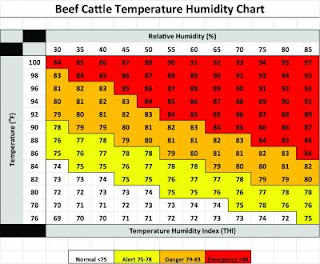 Cattlemen need to be aware of the risk based on weather forecasts of heat stress and engage steps to prevent it. Cattle producers can determine the risk in cattle handling by referring to the Temperature Humidity Index, or heat index. It’s essential to understand the relationship between temperature and humidity.
VETERINARY MEDICINE: How to prevent heat stress in cattle. Herdsmen should follow these guidelines in other to prevent heat stress along side using the table. 1) Cattle should only be moved short distances during hot weather. Strategic planning of pen movements can help reduce unnecessary movements and potential heat stress.
2) Move heavier cattle closer to loading facilities throughout the feeding period to minimize heat effects. When planning cattle handling and feeding facilities, cattle producers should consider airflow, shade and sprinkler systems for cooling livestock.
3)Handling cattle early in the morning before temperatures get too high is highly recommended. Handle cattle before 8 a.m. and never during daylight hours after 10 a.m. The animal's core temperature peaks about two hours after the environmental temperature peaks, and takes four to six hours to return to normal. Handling cattle in the early morning and evening will reduce the risk of heat stress.
4) When processing cattle during high-heat seasons, work with cattle in smaller groups to prevent them standing in holding areas much longer than 30 minutes. Cattle producers should use facilities that are shaded and have good airflow to help reduce the heat. A sprinkler system may help cool the area if the water droplet size is large. Never overcrowd working facilities. Work cattle slowly and use low-stress handling techniques.
The use of the chart coupled with these recommendations will help prevent heat stress in cattle. There is a new device,an app that actually gives an alert /signal /indications of heat stress in cattle get it here
Cattlemen need to be aware of the risk based on weather forecasts of heat stress and engage steps to prevent it. Cattle producers can determine the risk in cattle handling by referring to the Temperature Humidity Index, or heat index. It’s essential to understand the relationship between temperature and humidity.
VETERINARY MEDICINE: How to prevent heat stress in cattle. Herdsmen should follow these guidelines in other to prevent heat stress along side using the table. 1) Cattle should only be moved short distances during hot weather. Strategic planning of pen movements can help reduce unnecessary movements and potential heat stress.
2) Move heavier cattle closer to loading facilities throughout the feeding period to minimize heat effects. When planning cattle handling and feeding facilities, cattle producers should consider airflow, shade and sprinkler systems for cooling livestock.
3)Handling cattle early in the morning before temperatures get too high is highly recommended. Handle cattle before 8 a.m. and never during daylight hours after 10 a.m. The animal's core temperature peaks about two hours after the environmental temperature peaks, and takes four to six hours to return to normal. Handling cattle in the early morning and evening will reduce the risk of heat stress.
4) When processing cattle during high-heat seasons, work with cattle in smaller groups to prevent them standing in holding areas much longer than 30 minutes. Cattle producers should use facilities that are shaded and have good airflow to help reduce the heat. A sprinkler system may help cool the area if the water droplet size is large. Never overcrowd working facilities. Work cattle slowly and use low-stress handling techniques.
The use of the chart coupled with these recommendations will help prevent heat stress in cattle. There is a new device,an app that actually gives an alert /signal /indications of heat stress in cattle get it here
 Cattlemen need to be aware of the risk based on weather forecasts of heat stress and engage steps to prevent it. Cattle producers can determine the risk in cattle handling by referring to the Temperature Humidity Index, or heat index. It’s essential to understand the relationship between temperature and humidity.
VETERINARY MEDICINE: How to prevent heat stress in cattle. Herdsmen should follow these guidelines in other to prevent heat stress along side using the table. 1) Cattle should only be moved short distances during hot weather. Strategic planning of pen movements can help reduce unnecessary movements and potential heat stress.
2) Move heavier cattle closer to loading facilities throughout the feeding period to minimize heat effects. When planning cattle handling and feeding facilities, cattle producers should consider airflow, shade and sprinkler systems for cooling livestock.
3)Handling cattle early in the morning before temperatures get too high is highly recommended. Handle cattle before 8 a.m. and never during daylight hours after 10 a.m. The animal's core temperature peaks about two hours after the environmental temperature peaks, and takes four to six hours to return to normal. Handling cattle in the early morning and evening will reduce the risk of heat stress.
4) When processing cattle during high-heat seasons, work with cattle in smaller groups to prevent them standing in holding areas much longer than 30 minutes. Cattle producers should use facilities that are shaded and have good airflow to help reduce the heat. A sprinkler system may help cool the area if the water droplet size is large. Never overcrowd working facilities. Work cattle slowly and use low-stress handling techniques.
The use of the chart coupled with these recommendations will help prevent heat stress in cattle. There is a new device,an app that actually gives an alert /signal /indications of heat stress in cattle get it here
Cattlemen need to be aware of the risk based on weather forecasts of heat stress and engage steps to prevent it. Cattle producers can determine the risk in cattle handling by referring to the Temperature Humidity Index, or heat index. It’s essential to understand the relationship between temperature and humidity.
VETERINARY MEDICINE: How to prevent heat stress in cattle. Herdsmen should follow these guidelines in other to prevent heat stress along side using the table. 1) Cattle should only be moved short distances during hot weather. Strategic planning of pen movements can help reduce unnecessary movements and potential heat stress.
2) Move heavier cattle closer to loading facilities throughout the feeding period to minimize heat effects. When planning cattle handling and feeding facilities, cattle producers should consider airflow, shade and sprinkler systems for cooling livestock.
3)Handling cattle early in the morning before temperatures get too high is highly recommended. Handle cattle before 8 a.m. and never during daylight hours after 10 a.m. The animal's core temperature peaks about two hours after the environmental temperature peaks, and takes four to six hours to return to normal. Handling cattle in the early morning and evening will reduce the risk of heat stress.
4) When processing cattle during high-heat seasons, work with cattle in smaller groups to prevent them standing in holding areas much longer than 30 minutes. Cattle producers should use facilities that are shaded and have good airflow to help reduce the heat. A sprinkler system may help cool the area if the water droplet size is large. Never overcrowd working facilities. Work cattle slowly and use low-stress handling techniques.
The use of the chart coupled with these recommendations will help prevent heat stress in cattle. There is a new device,an app that actually gives an alert /signal /indications of heat stress in cattle get it here
Nebraska cattle producers urged to prepare for the Veterinary Feed Directive regulations.
Nebraska beef cattle producers should begin preparing for the Jan. 1, 2017, implementation of the Veterinary Feed Directive regulations, according to Rob Eirich, Nebraska beef quality assurance director with Nebraska Extension. The regulations will be implemented by the U.S. Food and Drug Administration and will require producers to work directly with their veterinarian when they use feed-grade antibiotics with all food-producing livestock.
A Veterinary Feed Directive is a paper or electronic written order by a licensed veterinarian approving the use of a feed-grade antibiotic for the prevention, treatment or control of a diagnosed disease. The regulations will apply only to antibiotics in livestock feed and will not affect feed-use medications such as ionophores, coccidia, other parasite and insect control drugs, or reproductive control medications. They also will not apply to antibiotics administered by injection.
The first step producers should complete before January is to develop a valid Veterinarian Client Patient Relationship, which includes an operation site visit and discussion about herd health," Eirich said. "A complete herd health plan should be created for vaccination and treatment protocols during this discussion."
Eirich said producers must look at their operation production calendar to determine what health risks they may encounter over the course of the year, how to prevent the risks through vaccinations and how to treat diagnosed diseases with antibiotics. This is an opportunity to look at alternatives to help reduce animal health risk, such as mineral programs or probiotic additives, he added.
If a treatment protocol calls for using a feed-grade antibiotic, producers will be required to obtain a Veterinary Feed Directive from their veterinarian prior to purchasing and feeding the product. The veterinarian must provide signed written or electronic copies to the feed distributor and producer before the directive product is delivered to the producer. The directive must state what is being treated, the product used, rate of inclusion, duration of treatment, number of head being treated and at what location or operation. Each directive must also include an expiration date, which is the last date the product can be fed.
Another key point for producers to understand, according to Eirich, is that the regulations allow no extra-label use of medicated feeds. These regulations will also be enforced more within the livestock industry, he said. Directive products can only be used for prevention, treatment or control of diseases indicated on the FDA Approved Labels.continue
New Bluetongue Test to Help India's Poor Improve Livestock Productivity.
Researchers at the UK's Pirbright Institute have developed field tests for Indian strains of bluetongue virus (BTV) that are reliable, rapid and simple to use.
Bluetongue is a viral disease transmitted by biting midges (Culicoides) that infects cattle, goats, sheep and wild animals such as deer, although sheep tend to be the most severely affected. In India, BTV impacts directly on subsistence level sheep farmers in southern states and is a key limiting factor in development.
There are currently 27 different types of bluetongue virus, or serotypes. In India, several serotypes are circulating, making vaccination against BTV especially difficult.
Tests that can accurately diagnose these different types of BTV have previously been confined to the laboratory, which causes inevitable delays in diagnosing which strains are circulating and causing disease. Scientists have therefore been keen to identify a diagnostic test that is both rapid and accurate.
Joint research by Professor Peter Mertens and his group at The Pirbright Institute and scientists from the LLR University of Veterinary and Animal Sciences (LUVAS), in India, has produced two new tests which are able to tell the difference between both the virus types that are currently circulating in India.
The technique used by the researchers; called loop-mediated isothermal amplification (LAMP), is a portable test which can be used in the field and is rapid and easy to use.
A new app that detects heat stress in cattle..
The US Department of Agriculture's Agricultural Research Service (ARS) has launched a new smartphone app that forecasts conditions triggering heat stress in cattle.
Compatible with Android and Apple mobile phone, the app issues forecasts one to seven days in advance of extreme heat conditions, along with recommended actions that can protect animals before and during a heat-stress event.
In some cattle, distress and discomfort from prolonged exposure to extreme heat cause diminished appetite, reduced growth or weight gain, greater susceptibility to disease and, in some cases, even death.
Cattle housed in confined feedlot pens are especially vulnerable to heat-stress events ,in addition to high temperatures, weather-related factors like humidity, wind speed, and solar radiation can also contribute to heat stress,
The "Heat Stress" app, which was beta-tested last year, is based on several years of field research conducted by Ms Brown-Brandl and colleagues. Get it here
Locust alert !!!
The federal government has alerted farmers of locusts and quelea birds coming into the country from Niger Republic. Audu Ogbeh, minister of agriculture and rural development, gave the warning in Abuja during an emergency meeting with commissioners for agriculture from 24 states.
Ogbeh expressed fear that the current hunger in the country would further be exacerbated if the alert from Niger was not taken seriously.He said Nigeria was already facing food crisis, and the entry of the pests could worsen the situation.
There is a warning received that locusts and quelea birds are messing up in Niger Republic, from where they normally attack us in Nigeria,” Ogbeh said.“We know how dangerous quail birds and locusts can be. If they arrive within hours or days, they will have wiped out everything the farmers would have put in the field.
The Prices of food today are high and Nigerians are troubled, People are angry and they want this high cost of food items to be resolved in no time. The minister added that a disease known as army worm had been attacking maize in the country. continue
Stray dog saves baby.
I love happy endings,this is how the boy now looks after a year. Before meets after:

 A stray dog has saved the life of a three-day-old baby girl who was apparently abandoned by her mother in a dustbin. Saudi Arabia’s daily ‘Sada' reported the news with breath taking pictures of the dog holding the newborn in his mouth.As per the reports published by the daily, the dog was hungry and was wandering on the streets in the search of some food but unfortunately he found nothing. It spotted a just born baby who had its umbilical cord still attached to her body,and what it did next has not only displayed the animal’s sensitivity towards humans but also proved why dog is called a loyal animal.
The dog knew that the baby was not doing well so he ensured that the baby suffered no more harm further. He put the new born into his mouth and moved her out of the dangerous streets in search of a safe place.He took the baby to the nearest house and placed her on the porch.
A stray dog has saved the life of a three-day-old baby girl who was apparently abandoned by her mother in a dustbin. Saudi Arabia’s daily ‘Sada' reported the news with breath taking pictures of the dog holding the newborn in his mouth.As per the reports published by the daily, the dog was hungry and was wandering on the streets in the search of some food but unfortunately he found nothing. It spotted a just born baby who had its umbilical cord still attached to her body,and what it did next has not only displayed the animal’s sensitivity towards humans but also proved why dog is called a loyal animal.
The dog knew that the baby was not doing well so he ensured that the baby suffered no more harm further. He put the new born into his mouth and moved her out of the dangerous streets in search of a safe place.He took the baby to the nearest house and placed her on the porch.

 A stray dog has saved the life of a three-day-old baby girl who was apparently abandoned by her mother in a dustbin. Saudi Arabia’s daily ‘Sada' reported the news with breath taking pictures of the dog holding the newborn in his mouth.As per the reports published by the daily, the dog was hungry and was wandering on the streets in the search of some food but unfortunately he found nothing. It spotted a just born baby who had its umbilical cord still attached to her body,and what it did next has not only displayed the animal’s sensitivity towards humans but also proved why dog is called a loyal animal.
The dog knew that the baby was not doing well so he ensured that the baby suffered no more harm further. He put the new born into his mouth and moved her out of the dangerous streets in search of a safe place.He took the baby to the nearest house and placed her on the porch.
A stray dog has saved the life of a three-day-old baby girl who was apparently abandoned by her mother in a dustbin. Saudi Arabia’s daily ‘Sada' reported the news with breath taking pictures of the dog holding the newborn in his mouth.As per the reports published by the daily, the dog was hungry and was wandering on the streets in the search of some food but unfortunately he found nothing. It spotted a just born baby who had its umbilical cord still attached to her body,and what it did next has not only displayed the animal’s sensitivity towards humans but also proved why dog is called a loyal animal.
The dog knew that the baby was not doing well so he ensured that the baby suffered no more harm further. He put the new born into his mouth and moved her out of the dangerous streets in search of a safe place.He took the baby to the nearest house and placed her on the porch.
Subscribe to:
Comments (Atom)
Agribusiness Millionaires

Learn how to make money in agribusiness.
Claim your bonus here..

Free dog care guide.
CASSAVA BUSINESS

CASSAVA FLAKES.