Sunday, July 9, 2017
Human urine as fertilizer.
Human urine as fertilizer.Urine, which most of us consider as waste, is a valuable resource which we can use directly as fertilizer.Urine is very safe, hygienic, easy to handle and collect, and easily available.
An environmental engineer, Mr Isaac Bryant, said that human urine was part of domestic waste water, which could be used as fertilizer. The lecturer said that using urine as fertilizer posed minimal health risk to both the environment and human beings.
He advised countries to tap into the resource rather than rely on chemical fertilizer which, he said, impacted negatively on the environment and posed a health risk to humans. He opined that instead of using chemical fertilizer for crops, human urine is better. “We can use human urine to cultivate crops such as maize, okro, tomato, pepper, garden eggs and some other vegetables. more

Friday, July 7, 2017
Epidemiologists, others advocate 'one-health' approach.
Epidemiologists, others advocate 'one-health' approach.Stakeholders identified one-health approach as the surest way to curtail public health challenges or diseases emergence in any country.
Stakeholders at the Annual Scientific Conference of the Nigeria Field Epidemiology and Laboratory Training Programme (NFELTP) have advocated “one-health approach” to address emergence and re-emergence of public health diseases in the country.
The stakeholders are the Nigeria Centre for Disease Control (NCDC), Ministry of Agriculture and Rural Development, Ministry of Health and African Field Epidemiology Network (AFENET), among others.
Mr Joshua Obasanya, Chairman, Local Organising Committee of the conference, identified one-health approach as the surest way to curtail public health challenges or diseases emergence in any country.
Obasanya said the conference was aimed at bringing together all agencies and relevant workforce that could bridge the gap between emerging and re-emerging diseases that were of animal origin and posed public health challenge.
He said that six out of 10 public health diseases emanated from animals. He, however, said the only way to nip this public health challenge in the bud was through the collaborative efforts of health officials, environmentalists, veterinarians and laboratory scientists, among others. more
The role of routine,discipline and focus for business success.
The role of routine,discipline and focus for business success. 241 years ago, 33-year-old Thomas Jefferson helped draft the Declaration of Independence.
Over the course of his career, he would go on to serve the fledgling United States as governor of Virginia, minister to France, secretary of state, vice president, and, finally, the country's third president.
Despite wearing so many hats in the government, Jefferson adhered to a relatively well-defined schedule throughout his life.
Here's a look at the Founding Father's daily routine:
Jefferson didn't wake up at a set time every day. Instead, he wrote that, "Whether I retire to bed early or late, I rise with the sun." Typically, he would get out of bed whenever there was enough light for him to read the clock next to his bed.
Before breakfast, the Founding Father would tend to his correspondence. Over the course of his life, he wrote somewhere around 20,000 letters.
Jefferson typically ate breakfast at 8:00 a.m. According to the blog Early to Rise and Colonial Williamsburg, the meal would likely include tea, hot wheat and corn bread, cold ham, butter, and "hoe cakes" — or cornmeal pancakes — and would be served in the dining room. more
How health workers are reducing under 5 deaths in Ethiopia.
How health workers are reducing under 5 deaths.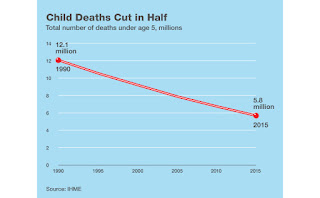 What does this chart mean? First, that descending red line captures one of the most amazing stories of human progress: It shows how the number of deaths of children under 5 per year has been cut in half since 1990.
Second, hidden along that line are millions of stories of the incredible work being done by health officials, governments, donors, and parents around the world to help save all those lives.
Here’s one of those stories. It begins with some remarkable women in Ethiopia and they are part of an innovative program that’s improved the health of millions of children in their country.
Back in 1990, Ethiopia had one of the highest rates of child mortality in the world. One in five children were dying before their 5th birthdays. With few doctors and most of its population living in rural areas, Ethiopia struggled to provide basic health services to the country. Most women in rural areas gave birth at home.
Then in 2000, the Ethiopian government made a commitment to improve its healthcare system. Ethiopia signed on to the United Nations’ Millennium Development Goals, which focused the world’s attention on fighting disease and ending poverty by using data to measure progress on health and development progress. As part of the goals, Ethiopia pledged to reduce under-five death rates by at least two-thirds by 2015.
To achieve it, Ethiopia needed to find an effective way to deliver healthcare to the remotest corners of the country. But training thousands of new doctors to staff them would take years and would be extremely costly. Instead, Ethiopia created a community health worker program.
They selected thousands of people, primarily young women with at least a 10th grade education, and trained them in a set of basic health skills—including how to deliver babies, administer immunizations, and provide family planning support—that are proven to save lives. Most of the health workers were recruited from the communities they served, helping to quickly build public trust in the new effort. more
What does this chart mean? First, that descending red line captures one of the most amazing stories of human progress: It shows how the number of deaths of children under 5 per year has been cut in half since 1990.
Second, hidden along that line are millions of stories of the incredible work being done by health officials, governments, donors, and parents around the world to help save all those lives.
Here’s one of those stories. It begins with some remarkable women in Ethiopia and they are part of an innovative program that’s improved the health of millions of children in their country.
Back in 1990, Ethiopia had one of the highest rates of child mortality in the world. One in five children were dying before their 5th birthdays. With few doctors and most of its population living in rural areas, Ethiopia struggled to provide basic health services to the country. Most women in rural areas gave birth at home.
Then in 2000, the Ethiopian government made a commitment to improve its healthcare system. Ethiopia signed on to the United Nations’ Millennium Development Goals, which focused the world’s attention on fighting disease and ending poverty by using data to measure progress on health and development progress. As part of the goals, Ethiopia pledged to reduce under-five death rates by at least two-thirds by 2015.
To achieve it, Ethiopia needed to find an effective way to deliver healthcare to the remotest corners of the country. But training thousands of new doctors to staff them would take years and would be extremely costly. Instead, Ethiopia created a community health worker program.
They selected thousands of people, primarily young women with at least a 10th grade education, and trained them in a set of basic health skills—including how to deliver babies, administer immunizations, and provide family planning support—that are proven to save lives. Most of the health workers were recruited from the communities they served, helping to quickly build public trust in the new effort. more
 What does this chart mean? First, that descending red line captures one of the most amazing stories of human progress: It shows how the number of deaths of children under 5 per year has been cut in half since 1990.
Second, hidden along that line are millions of stories of the incredible work being done by health officials, governments, donors, and parents around the world to help save all those lives.
Here’s one of those stories. It begins with some remarkable women in Ethiopia and they are part of an innovative program that’s improved the health of millions of children in their country.
Back in 1990, Ethiopia had one of the highest rates of child mortality in the world. One in five children were dying before their 5th birthdays. With few doctors and most of its population living in rural areas, Ethiopia struggled to provide basic health services to the country. Most women in rural areas gave birth at home.
Then in 2000, the Ethiopian government made a commitment to improve its healthcare system. Ethiopia signed on to the United Nations’ Millennium Development Goals, which focused the world’s attention on fighting disease and ending poverty by using data to measure progress on health and development progress. As part of the goals, Ethiopia pledged to reduce under-five death rates by at least two-thirds by 2015.
To achieve it, Ethiopia needed to find an effective way to deliver healthcare to the remotest corners of the country. But training thousands of new doctors to staff them would take years and would be extremely costly. Instead, Ethiopia created a community health worker program.
They selected thousands of people, primarily young women with at least a 10th grade education, and trained them in a set of basic health skills—including how to deliver babies, administer immunizations, and provide family planning support—that are proven to save lives. Most of the health workers were recruited from the communities they served, helping to quickly build public trust in the new effort. more
What does this chart mean? First, that descending red line captures one of the most amazing stories of human progress: It shows how the number of deaths of children under 5 per year has been cut in half since 1990.
Second, hidden along that line are millions of stories of the incredible work being done by health officials, governments, donors, and parents around the world to help save all those lives.
Here’s one of those stories. It begins with some remarkable women in Ethiopia and they are part of an innovative program that’s improved the health of millions of children in their country.
Back in 1990, Ethiopia had one of the highest rates of child mortality in the world. One in five children were dying before their 5th birthdays. With few doctors and most of its population living in rural areas, Ethiopia struggled to provide basic health services to the country. Most women in rural areas gave birth at home.
Then in 2000, the Ethiopian government made a commitment to improve its healthcare system. Ethiopia signed on to the United Nations’ Millennium Development Goals, which focused the world’s attention on fighting disease and ending poverty by using data to measure progress on health and development progress. As part of the goals, Ethiopia pledged to reduce under-five death rates by at least two-thirds by 2015.
To achieve it, Ethiopia needed to find an effective way to deliver healthcare to the remotest corners of the country. But training thousands of new doctors to staff them would take years and would be extremely costly. Instead, Ethiopia created a community health worker program.
They selected thousands of people, primarily young women with at least a 10th grade education, and trained them in a set of basic health skills—including how to deliver babies, administer immunizations, and provide family planning support—that are proven to save lives. Most of the health workers were recruited from the communities they served, helping to quickly build public trust in the new effort. more
How to make climate smart agriculture profitable for smallholder.
How to make climate smart agriculture profitable for smallholder.Globally, agriculture generates about 13 percent of the greenhouse gasses that are responsible for climate change. With the global population growing, however, we cannot afford to cut back on agricultural production in an effort to slow climate change.
We have to grow more, and we have to grow it smarter.
At the same time, farmers – and especially smallholder farmers – are among those most vulnerable to the effects of climate change. Changes in rainfall patterns, the expanding range of crop diseases and pests, and soil erosion conspire to drive down yields and farm incomes.
However, smallholders often have difficulty adopting more environmentally friendly practices, either because they represent an extra expense –which the farmers cannot bear, as they already operate on very thin margins of profitability – or because the farmers don’t have access to the necessary materials and services.
To encourage smallholders to adopt sustainable practices, it is therefore important to identify and promote approaches that are not just green, but are easy to adopt and provide an immediate financial benefit to the farmers.
Creating Win-Win Scenarios for Farmers and the Environment
This is very important in India, which is the fourth-largest producer of agricultural greenhouse gas emissions, and where most farmers already earn little, due to low yields and low prices.
These farmers cannot afford costly new technologies or techniques to reduce their environmental impact or adapt to changing conditions.
To address that challenge, a partnership between Kellogg and TechnoServe is helping more than 12,000 farmers in corn, wheat, soy and legume-growing regions of Madhya Pradesh adopt profitable, environmentally friendly and easily accessible techniques.
For example, the project encourages farmers to plant trees on farm bunds – landscaping features designed to hold the flow of groundwater during the monsoon season – to help absorb carbon, combat soil erosion, and provide shade for crops, while also yielding potential income from the trees’ fruit and timber in the future.
Farmers are also supported in adopting traditional Indian soil-enhancement practices, such as use of amrit khadh and amrit pani (traditional Indian bio-fertilizers) and more sustainable pest management practices that reduce costs while improving soil quality and agricultural yields. At the same time, a group of village entrepreneurs ensures that low-cost supportive services are available to farmers at their doorstep, thus making it a sustainable model. more
How precision farming is increasing corn yield for Kellogg's cornflakes.
How precision farming is increasing corn yield for Kellogg's cornflakes.
 Much has changed since his great-great-grandfather first broke sod in 1849. On their 12,000-acre farm between Danville, IL, and Ambia, IN, Randy W. uses technology, machinery and a team of five people to help plant corn that goes into Kellogg’s Corn Flakes.
“We can plant 500 acres in a day with one planter…and we have two. My father used to plant 500 acres for an entire season,” Randy says. “It takes patience and precision.”
Much has changed since his great-great-grandfather first broke sod in 1849. On their 12,000-acre farm between Danville, IL, and Ambia, IN, Randy W. uses technology, machinery and a team of five people to help plant corn that goes into Kellogg’s Corn Flakes.
“We can plant 500 acres in a day with one planter…and we have two. My father used to plant 500 acres for an entire season,” Randy says. “It takes patience and precision.”
 Randy points to precision as one key to sustainable agriculture. “With high-tech mapping of our fields we know what areas carry more moisture or which need fertilizer or herbicides. Then we spoon on as little as is needed. It is better for the environment that way.” He is quick to add with a smile, “and it saves money”
Doing more with less is a common theme among farmers today both for sustainability and economics. [A lot of the younger generation] go to school, and sometimes they don’t come back to the farm. So you have to continue to do more with fewer people, and that’s where technology plays a part. more
Randy points to precision as one key to sustainable agriculture. “With high-tech mapping of our fields we know what areas carry more moisture or which need fertilizer or herbicides. Then we spoon on as little as is needed. It is better for the environment that way.” He is quick to add with a smile, “and it saves money”
Doing more with less is a common theme among farmers today both for sustainability and economics. [A lot of the younger generation] go to school, and sometimes they don’t come back to the farm. So you have to continue to do more with fewer people, and that’s where technology plays a part. more
 Much has changed since his great-great-grandfather first broke sod in 1849. On their 12,000-acre farm between Danville, IL, and Ambia, IN, Randy W. uses technology, machinery and a team of five people to help plant corn that goes into Kellogg’s Corn Flakes.
“We can plant 500 acres in a day with one planter…and we have two. My father used to plant 500 acres for an entire season,” Randy says. “It takes patience and precision.”
Much has changed since his great-great-grandfather first broke sod in 1849. On their 12,000-acre farm between Danville, IL, and Ambia, IN, Randy W. uses technology, machinery and a team of five people to help plant corn that goes into Kellogg’s Corn Flakes.
“We can plant 500 acres in a day with one planter…and we have two. My father used to plant 500 acres for an entire season,” Randy says. “It takes patience and precision.”
 Randy points to precision as one key to sustainable agriculture. “With high-tech mapping of our fields we know what areas carry more moisture or which need fertilizer or herbicides. Then we spoon on as little as is needed. It is better for the environment that way.” He is quick to add with a smile, “and it saves money”
Doing more with less is a common theme among farmers today both for sustainability and economics. [A lot of the younger generation] go to school, and sometimes they don’t come back to the farm. So you have to continue to do more with fewer people, and that’s where technology plays a part. more
Randy points to precision as one key to sustainable agriculture. “With high-tech mapping of our fields we know what areas carry more moisture or which need fertilizer or herbicides. Then we spoon on as little as is needed. It is better for the environment that way.” He is quick to add with a smile, “and it saves money”
Doing more with less is a common theme among farmers today both for sustainability and economics. [A lot of the younger generation] go to school, and sometimes they don’t come back to the farm. So you have to continue to do more with fewer people, and that’s where technology plays a part. more
TechnoServe and the Kellogg Company sowing seeds of women's empowerment in India.
TechnoServe and the Kellogg Company sowing seeds of women's empowerment in India. TechnoServe and the Kellogg Company are working with women in Madhya Pradesh to grow nutritious food for their families using climate-smart agriculture.
As a child, Rachna Sharma dreamed of becoming a teacher just like several male members of her family. However, she never expected to make this dream a reality, as girls were not allowed to work in her family. Little did she know that she would become a mentor to 300 local women, helping them to increase their families’ nutrition and establish their roles in family and agricultural decision-making.
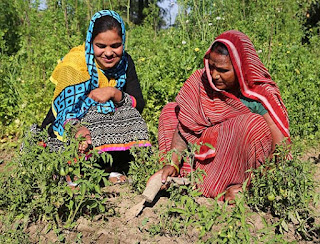 Rachna’s dream of becoming a teacher came to fruition through TechnoServe’s collaboration with the Kellogg Company, which seeks to improve the livelihoods of over 12,000 smallholder farmers in India through the promotion of climate-smart agriculture (CSA) techniques led by TechnoServe.
This work supports Kellogg’s Global Sustainability Commitments to support a half million farmers by 2025, focusing on CSA to improve livelihoods. As research and TechnoServe’s past experience demonstrates, investing in opportunities for women leads to additional benefits at the household level and beyond; thus the initiative prioritizes the inclusion of women.
In addition to training women farmers on CSA, TechnoServe and Kellogg identified an opportunity to increase the role women play in the farm economy while simultaneously enhancing the nutritional intake of participating households by training women in organic kitchen gardening.
The project helps women to establish backyard gardens using organic inputs and farming practices for four nutritionally diverse crops at a time. With fresh produce at hand in the garden, women gain better quality vegetables without spending at market, saving travel time and money while diversifying their families’ access to essential nutrients.
However, while many women were willing to implement gardens, finding local women to lead the training sessions was a challenge. In a region where women have not historically worked, there were no female volunteers, and women were not comfortable learning from a male technician. In order to initiate a cycle of change, TechnoServe’s village volunteer, Ratiram, went from household to household, searching for a woman like Rachna to hire as the project’s first local resource person (LRP). When Rachna expressed interest at the opportunity to become a female educator – and teaching other women, no less – the TechnoServe team supported her in reaching an agreement with her father. more
Rachna’s dream of becoming a teacher came to fruition through TechnoServe’s collaboration with the Kellogg Company, which seeks to improve the livelihoods of over 12,000 smallholder farmers in India through the promotion of climate-smart agriculture (CSA) techniques led by TechnoServe.
This work supports Kellogg’s Global Sustainability Commitments to support a half million farmers by 2025, focusing on CSA to improve livelihoods. As research and TechnoServe’s past experience demonstrates, investing in opportunities for women leads to additional benefits at the household level and beyond; thus the initiative prioritizes the inclusion of women.
In addition to training women farmers on CSA, TechnoServe and Kellogg identified an opportunity to increase the role women play in the farm economy while simultaneously enhancing the nutritional intake of participating households by training women in organic kitchen gardening.
The project helps women to establish backyard gardens using organic inputs and farming practices for four nutritionally diverse crops at a time. With fresh produce at hand in the garden, women gain better quality vegetables without spending at market, saving travel time and money while diversifying their families’ access to essential nutrients.
However, while many women were willing to implement gardens, finding local women to lead the training sessions was a challenge. In a region where women have not historically worked, there were no female volunteers, and women were not comfortable learning from a male technician. In order to initiate a cycle of change, TechnoServe’s village volunteer, Ratiram, went from household to household, searching for a woman like Rachna to hire as the project’s first local resource person (LRP). When Rachna expressed interest at the opportunity to become a female educator – and teaching other women, no less – the TechnoServe team supported her in reaching an agreement with her father. more
 Rachna’s dream of becoming a teacher came to fruition through TechnoServe’s collaboration with the Kellogg Company, which seeks to improve the livelihoods of over 12,000 smallholder farmers in India through the promotion of climate-smart agriculture (CSA) techniques led by TechnoServe.
This work supports Kellogg’s Global Sustainability Commitments to support a half million farmers by 2025, focusing on CSA to improve livelihoods. As research and TechnoServe’s past experience demonstrates, investing in opportunities for women leads to additional benefits at the household level and beyond; thus the initiative prioritizes the inclusion of women.
In addition to training women farmers on CSA, TechnoServe and Kellogg identified an opportunity to increase the role women play in the farm economy while simultaneously enhancing the nutritional intake of participating households by training women in organic kitchen gardening.
The project helps women to establish backyard gardens using organic inputs and farming practices for four nutritionally diverse crops at a time. With fresh produce at hand in the garden, women gain better quality vegetables without spending at market, saving travel time and money while diversifying their families’ access to essential nutrients.
However, while many women were willing to implement gardens, finding local women to lead the training sessions was a challenge. In a region where women have not historically worked, there were no female volunteers, and women were not comfortable learning from a male technician. In order to initiate a cycle of change, TechnoServe’s village volunteer, Ratiram, went from household to household, searching for a woman like Rachna to hire as the project’s first local resource person (LRP). When Rachna expressed interest at the opportunity to become a female educator – and teaching other women, no less – the TechnoServe team supported her in reaching an agreement with her father. more
Rachna’s dream of becoming a teacher came to fruition through TechnoServe’s collaboration with the Kellogg Company, which seeks to improve the livelihoods of over 12,000 smallholder farmers in India through the promotion of climate-smart agriculture (CSA) techniques led by TechnoServe.
This work supports Kellogg’s Global Sustainability Commitments to support a half million farmers by 2025, focusing on CSA to improve livelihoods. As research and TechnoServe’s past experience demonstrates, investing in opportunities for women leads to additional benefits at the household level and beyond; thus the initiative prioritizes the inclusion of women.
In addition to training women farmers on CSA, TechnoServe and Kellogg identified an opportunity to increase the role women play in the farm economy while simultaneously enhancing the nutritional intake of participating households by training women in organic kitchen gardening.
The project helps women to establish backyard gardens using organic inputs and farming practices for four nutritionally diverse crops at a time. With fresh produce at hand in the garden, women gain better quality vegetables without spending at market, saving travel time and money while diversifying their families’ access to essential nutrients.
However, while many women were willing to implement gardens, finding local women to lead the training sessions was a challenge. In a region where women have not historically worked, there were no female volunteers, and women were not comfortable learning from a male technician. In order to initiate a cycle of change, TechnoServe’s village volunteer, Ratiram, went from household to household, searching for a woman like Rachna to hire as the project’s first local resource person (LRP). When Rachna expressed interest at the opportunity to become a female educator – and teaching other women, no less – the TechnoServe team supported her in reaching an agreement with her father. more
Subscribe to:
Comments (Atom)
Agribusiness Millionaires

Learn how to make money in agribusiness.
Claim your bonus here..

Free dog care guide.
CASSAVA BUSINESS

CASSAVA FLAKES.